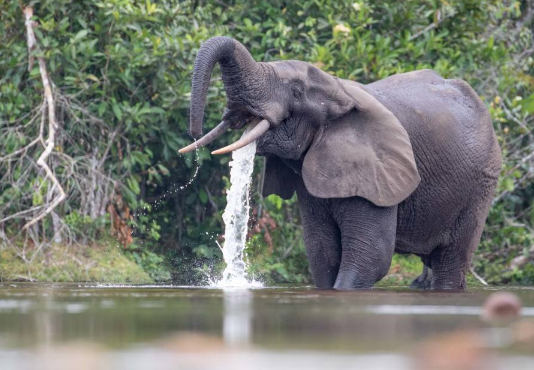
The forest elephant, a lesser-known cousin of the African savanna elephant, exhibits fascinating behaviors that are not often seen due to their dense jungle habitats. Understanding these unique traits helps us appreciate their ecological roles and how to conserve these magnificent creatures.
1. Social Structure and Communication
Forest elephants are social animals that live in smaller, matriarchal groups compared to their savanna counterparts. A typical herd consists of a few females and their young, while adult males generally leave the herd upon reaching maturity. This smaller social structure is essential for navigating the dense jungle, where visibility is limited, and cooperation is vital for survival.
Communication is key among forest elephants, as they use a variety of vocalizations, body language, and even seismic signals to interact with each other. Their low-frequency rumbles can travel over long distances, allowing them to communicate even when hidden from view. This intricate communication system helps maintain the social bonds within the herd and coordinate activities like foraging and migration.
-
- Observe the social dynamics in a herd setting.
-
- Learn about different vocalizations through documentaries.
-
- Take note of body language when watching elephants.
-
- Understand the significance of matriarch leadership.
2. Foraging and Feeding Habits
Forest elephants have a unique diet compared to their savanna relatives, relying heavily on the diverse flora of the jungle. They consume a wide range of vegetation, including fruits, leaves, and bark from various trees. These dietary preferences not only sustain them but also play a crucial role in forest ecology, as they help in seed dispersal and maintaining plant diversity.
Due to their smaller size, forest elephants are often more agile in navigating dense undergrowth. They can bend or break branches and use their tusks to dig for roots buried beneath the forest floor. By doing so, they create paths in the jungle, facilitating movement for other species and enhancing the overall ecosystem productivity.
-
- Research the types of plants that forest elephants prefer.
-
- Understand the role of elephants in seed dispersal.
-
- Observe how they forage in their natural habitat.
-
- Share information about their digestive processes and dietary habits.
3. Impact of Habitat and Conservation Challenges
The dense jungles that forest elephants inhabit are increasingly threatened by deforestation, poaching, and climate change. These factors not only reduce their habitat but also disrupt their social structures and food sources. Understanding how these challenges affect their behavior is crucial for implementing effective conservation strategies.
Conservation efforts are underway to protect these majestic creatures and their environments. Community programs aimed at sustainable practices and awareness campaigns help mitigate human-elephant conflicts. Educating local communities about the importance of forest elephants can lead to better protection and coexistence strategies.
-
- Support local and international conservation efforts.
-
- Engage in eco-tourism that promotes wildlife preservation.
-
- Advocate for policies against poaching and deforestation.
-
- Educate others about the importance of biodiversity.
In conclusion, understanding the behaviors of forest elephants in their natural habitats enriches our knowledge of these unique animals and highlights the importance of their conservation. Consider supporting conservation initiatives and learning more about how you can contribute to protecting these magnificent creatures and their ecosystem.