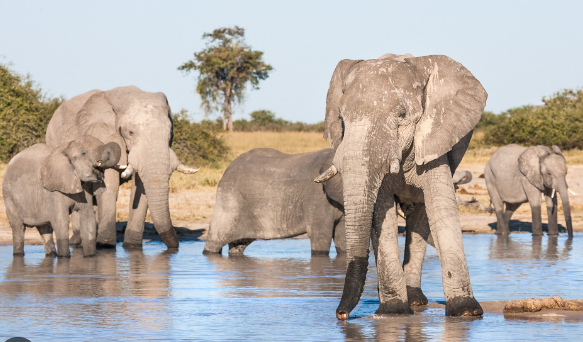
Elephants are remarkable creatures known for their intelligence, strong social bonds, and complex communication skills. One of the most fascinating aspects of their behavior is their ability to recognize individual members within their herds. This ability is crucial for maintaining relationships, social cohesion, and ensuring the well-being of the group.
1. The Importance of Social Bonds
Elephants are highly social animals that form tight-knit family units, typically led by a matriarch. Recognizing individual herd members allows them to nurture these social bonds effectively. For instance, elephants have been observed engaging in behaviors such as greeting, nurturing, and even communicating specific needs, all of which hinge on their ability to identify each other. This social recognition is essential not only for cohesion but also for cooperative behaviors like caring for calves or protecting the herd from threats.
Social recognition can also aid in the survival of the herd. Studies have shown that elephants will work together to achieve common goals, such as locating food or water sources. This cooperation is founded on their knowledge of each member’s strengths and weaknesses, enabling them to strategize effectively. When bonding is compromised, the overall stability of the herd is at risk, potentially leading to fragmentation and reduced chances of survival.
-
- Understand the roles within the herd (matriarch, caregivers, hunters).
-
- Observe behaviors that show bonding, such as touching and vocalizations.
-
- Encourage knowledge sharing within your social groups.
-
- Recognize the value of relationships in group settings.
2. How Elephants Use Scent to Recognize Each Other
One of the most significant ways elephants recognize each other is through scent. They possess an extraordinary sense of smell, allowing them to identify individuals from considerable distances. Scent marks, emitted through urine or secreted from glands, carry unique chemical signatures that relay vital information about an individual’s identity, social status, and even reproductive condition. This olfactory recognition is particularly useful in dense environments like forests, where visibility is limited.
Elephants often engage in scrubbing—rubbing their bodies against trees or dirt—to collect scents from their surroundings and emit their own. When they encounter others, they engage in a process of sniffing to gather information. This scent-based communication helps in establishing hierarchies, determining familiarity, and even assessing the emotional state of other herd members. Understanding this complex olfactory communication can deepen our appreciation for how these gentle giants navigate their world.
-
- Learn about the importance of scent in elephant communities.
-
- Observe elephants closely to witness scent-marking behaviors.
-
- Evaluate the surrounding environment for scent markers.
-
- Have discussions about the role of smell in various species.
3. Vocalizations and Visual Signals
In addition to scent, elephants utilize vocalizations and visual signals to communicate and recognize each other. They are known to produce a wide variety of sounds ranging from trumpets to low-frequency rumbles, which can travel long distances. These calls are not only used for identifying individuals but also for conveying messages such as warnings or invitations to join. For example, a mother elephant may use distinct vocalizations to call her calf, which the young elephant learns to recognize and respond to.
In addition to vocalizations, visual cues play a vital role in recognition. Elephants have the remarkable ability to read body language and non-verbal signals among herd members. Their large ears, expressive trunks, and posture can communicate emotional states, intentions, and even social hierarchy. Understanding these visual signals is essential for other herd members to assess situations and respond accordingly, ensuring smooth social interactions within the group.
-
- Pay attention to the variety of vocalizations made by elephants.
-
- Note how body language conveys emotional states.
-
- Encourage discussions on non-verbal communication in humans and animals.
-
- Observe interactions in an elephant herd to see communication in action.
4. Long-Term Memory and Recognition
Elephants exhibit extraordinary long-term memory, which plays a crucial role in their ability to recognize individual herd members. Research indicates that elephants can remember specific individuals even years after they last met. This long-term recall is supported by their exceptional brain size and complex neural networks. Their memories can store information about those they’ve encountered, including their relationships, social status, and past interactions.
This remarkable memory is not just for familiar herd members; it extends to elephants they may have encountered in different locations. For instance, a matriarch may recognize a distant relative or a rival from encounters years earlier, influencing her decisions regarding interactions and resource sharing. This ability to remember individuals underscores the sophisticated social structures within elephant communities and highlights their intelligence.
-
- Explore ways to enhance memory in social settings.
-
- Engage in storytelling to strengthen your memories of people.
-
- Practice remembering names and details about friends and acquaintances.
-
- Reflect on the importance of shared experiences in building relationships.
In conclusion, the ability of elephants to recognize individual herd members is a testament to their intelligence and complex social structures. Understanding these incredible attributes not only fosters a deeper appreciation for these majestic animals but also inspires us to consider how we recognize and nurture our own social bonds—much like the intricate beauty often depicted in an elephant sculpture, which captures their emotional depth and familial connections. Encouraging awareness and knowledge can pave the way for a more harmonious coexistence among all living beings.