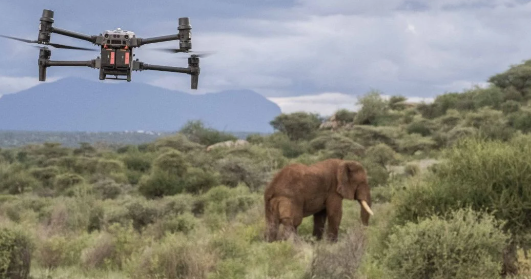
Observation technology has revolutionized the way researchers study elephants, providing insights into their behavior, social structures, and environments. However, despite its advantages, there are significant limitations that can affect the effectiveness of gathered data. Understanding these challenges is crucial for enhancing future research methods.
1. Reliability of Data Collection
Data collected through observation technology, such as cameras and drones, can sometimes be unreliable. For instance, camera traps may fail to capture all animal activity due to factors like obstructions in the field of view, poor lighting conditions, or technical malfunctions. Additionally, elephants are large, mobile creatures, and their behaviors can vary significantly based on numerous external factors, which may not be captured in snapshot data.
Moreover, the interpretation of data can also present challenges. Researchers might misinterpret a captured behavior or situation, which could lead to inaccurate conclusions. For example, a video depicting aggressive interactions may be interpreted as a conflict, while it could actually be a part of playful or social behavior among elephants. A nuanced understanding is required to analyze the sheer volume of data effectively.
-
- Regularly check and maintain equipment to ensure operational efficiency.
-
- Establish protocols for data interpretation to minimize bias.
-
- Utilize multiple observation technologies to cross-verify findings.
-
- Incorporate local knowledge and traditional practices in research methodology.
2. Ethical Considerations of Observation
The use of observation technology raises ethical questions, particularly concerning the privacy and well-being of elephants. Constant surveillance can stress these animals and alter their natural behavior. For instance, if elephants are aware of being monitored, they might change their social interactions or movements, leading to skewed data.
Furthermore, there’s the risk of human interference. Prolonged exposure to human technology can condition elephants to associate humans with potential threats, which can have lasting consequences. It’s vital to create guidelines that mitigate these risks, ensuring a balance between observation and the animals’ natural behaviors.
-
- Limit the duration of surveillance to reduce stress on the animals.
-
- Ensure a buffer zone between monitoring equipment and elephant habitats.
-
- Engage with local communities to create awareness about ethical observation.
-
- Implement strict guidelines on data use to protect animal welfare.
3. Technological Limitations and Accessibility
While observation technology has advanced significantly, limitations still exist regarding its accessibility and usability. Remote areas where elephants roam often lack the necessary infrastructure for deploying high-tech equipment, making it difficult for researchers to obtain comprehensive data. For instance, solar-powered cameras may not work efficiently in regions with limited sunlight.
Moreover, the high costs associated with sophisticated technology can limit its use in many fields. Smaller research organizations or conservation groups may not have access to the latest tools, creating a disparity in data quality and research outcomes. Collaboration among institutions, as well as funding initiatives, can help mitigate these limitations.
-
- Seek partnerships with tech companies to access advanced tools at reduced costs.
-
- Explore alternative technologies that are more affordable and efficient.
-
- Train local researchers to use technology effectively.
-
- Apply for grants and funds focused on conservation technology.
4. Data Overload and Management Challenges
With the influx of data from observation technology, researchers face challenges in data management and analysis. High-resolution video and sensor data create massive datasets that can overwhelm traditional methods of analysis, leading to longer processing times and potential oversights. For example, a single monitoring station could generate several terabytes of video footage in a short time, complicating data organization.
Additionally, the lack of standardization in data collection often makes it harder to compare results among studies. Researchers may use different metrics or terminologies, which could prevent the generalization of findings. Implementing a standardized framework for data collection and analysis can help address these issues, enabling researchers to draw more comprehensive conclusions.
-
- Invest in data management software to streamline analysis processes.
-
- Establish a common framework for data collection across studies.
-
- Train team members in data processing techniques to optimize efficiency.
-
- Encourage interdisciplinary collaboration for deeper insights.
In conclusion, while observation technology has opened new avenues in elephant research, its limitations are significant. Researchers must address these challenges through careful planning and collaboration to enhance their studies’ effectiveness and contribute positively to elephant conservation. By acknowledging these factors, we can work toward more ethical and productive research practices.