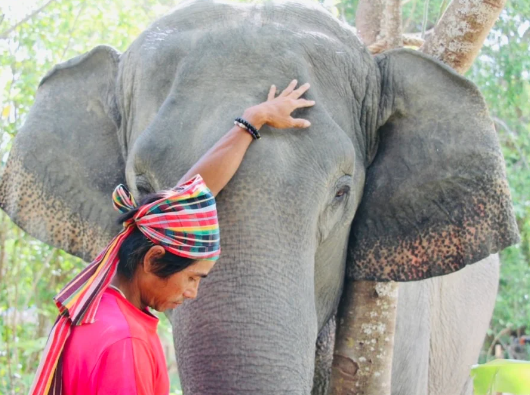
Elephants are often hailed as one of the most intelligent animals on the planet. Their remarkable problem-solving abilities are not only captivating but also showcase their cognitive skills and social complexity. From the ways they interact with their environment to the strategies they employ for survival, elephants provide a fascinating glimpse into animal intelligence.
1. Social Learning Through Cooperation
One of the most significant demonstrations of problem-solving in elephants is their ability to learn from one another. In social groups, elephants observe the actions of their peers and adapt those strategies to their own contexts. For example, if one elephant discovers a method to access water or food, others may closely watch and replicate that behavior, strengthening their social bonds while solving problems collaboratively.
This cooperative learning doesn’t just stop at simple tasks. Elephants have been observed working together to overcome greater challenges, such as moving heavy objects or protecting their young from predators. Their ability to communicate and coordinate actions dramatically increases their chances of success in these situations.
-
- Encourage cooperative behaviors in groups by rewarding teamwork.
-
- Provide opportunities for observational learning through demonstrations.
-
- Facilitate frequent social interactions among individuals.
-
- Encourage problem-solving tasks that require collaboration.
2. Tool Use and Environmental Manipulation
Many people might be surprised to learn that elephants can use tools, a trait once thought to be unique to humans and a few other species. In various studies, elephants have been documented using sticks, branches, or even their own tusks to achieve specific goals, such as scratching themselves or bending trees to reach food. This illustrates not only their cognitive capabilities but also their understanding of cause-and-effect relationships in their environment.
In addition to tool use, elephants manipulate their surroundings to solve problems. They may dig holes to find water during dry seasons or push over trees to access their leaves. These actions indicate a level of ingenuity and foresight, allowing elephants to adapt to challenges they face in their habitats.
-
- Observe elephants in varied environments to see problem-solving firsthand.
-
- Document instances of tool use and manipulation of surroundings.
-
- Evaluate their methods to understand their reasoning.
-
- Encourage conservation efforts that protect their habitats.
-
- Create environments that stimulate natural behaviors and problem-solving.
3. Memory and Spatial Awareness
Elephants are renowned for their impressive memory, which plays a crucial role in their ability to solve problems. Their large brains contain a robust hippocampus, allowing them to recall vital information about locations, water sources, and social relationships. This remarkable memory enables them to navigate vast territories and find resources over long periods, even years, later.
Moreover, their memory isn’t just about recall; it enriches their problem-solving skills. Elephants can learn from past experiences and adapt their strategies based on previous outcomes. For instance, if a specific route to a water source becomes blocked, they can remember alternative paths they’ve used before, showcasing strategic thinking born from long-term memory.
-
- Document important locations and changes in the environment.
-
- Observe how older elephants transmit knowledge to younger ones.
-
- Protect migratory routes essential for their survival.
-
- Promote environments that challenge their spatial navigation skills.
4. Emotional Intelligence and Empathy
Elephants exhibit a unique form of problem-solving that stems from their emotional intelligence and empathy. Their social structure is intricate and deeply rooted in affection and mutual support, allowing them to respond to each other’s emotional states. For instance, when a member of the herd is in distress, other elephants often rally around to provide comfort, demonstrating not just social cohesion but a profound understanding of emotional needs.
This emotional intelligence aids in navigating challenges that may not be purely physical. For example, an elephant may reconsider a course of action—such as approaching a dangerous area—if another member of the herd shows fear or hesitation. This interplay between emotion and problem-solving highlights the complex social dynamics that elephants navigate daily.
-
- Encourage environments that foster social bonds and emotional health.
-
- Facilitate group activities that promote empathy and support.
-
- Recognize signs of stress or discomfort among individuals.
-
- Educate about the importance of emotional intelligence in animal behavior.
In conclusion, the problem-solving abilities of elephants are not only a testament to their intelligence but also a reminder of the profound connections and interactions that exist in the animal kingdom. From cooperative learning to emotional intelligence, elephants showcase a range of skills that can inspire us. Consider exploring ways to support and protect these magnificent creatures and their habitats.