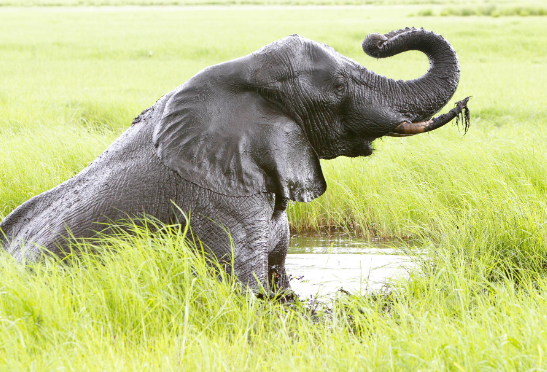
Elephants are remarkable creatures, not only in size but also in their capacity for communication. Recent scientific observations have unveiled a fascinating aspect of their social behavior: infrasound communication. This blog post will explore how elephants use low-frequency sounds to convey messages over long distances.
1. What is Infrasound?
Infrasound refers to sound waves with frequencies lower than 20 Hz, which are below the audible range for humans. Elephants, with their sensitive hearing capabilities, can produce and hear these low-frequency sounds. This ability allows them to communicate effectively over several kilometers, particularly in dense forests or when terrain is challenging, where higher frequencies would dissipate quickly.
In the wild, elephants have been observed to produce infrasound communication during various social interactions. This includes conveying alarm signals when predators are around, coordinating movement within a herd, or expressing distress due to separation. These sounds are perceived to be not only a means of communication but also play a crucial role in social bonding within the group.
-
- Understand that infrasound is below human hearing range.
-
- Know that elephants can hear these sounds from several kilometers away.
-
- Recognize the significance of infrasound in elephant communication.
-
- Observe how elephants use infrasound for social bonding and alerts.
2. How Do Elephants Use Infrasound Communication?
The mechanics behind elephant infrasound communication involves both vocalizations and body language. Elephants produce these low-frequency sounds using their vocal cords, and they can also vibrate their bodies to create additional resonating sounds. Research has shown that these sounds can travel through the ground, which elephants can then detect through their sensitive feet, further enhancing their communication network.
Elephants display different types of infrasound calls depending on the context. For instance, a call during a reunion can be softer, expressing joy, while a warning call may be more powerful and urgent. By varying the frequency and intensity of these sounds, elephants can convey complex messages that are vital for their survival and social structure.
-
- Observe how elephants vocalize for social interactions.
-
- Consider how body language complements vocalizations.
-
- Recognize different types of infrasound calls in various contexts.
-
- Learn about the importance of sound intensity and frequency variations.
3. The Role of Infrasound in Conservation Efforts
Understanding infrasound communication has significant implications for elephant conservation efforts. By studying these low-frequency sounds, researchers can gain insights into elephant behavior and movements, which is crucial for developing effective conservation strategies. For instance, knowing how elephants communicate over long distances can help in the planning of wildlife corridors, which may mitigate human-elephant conflicts.
Moreover, recognizing the social structure and communication patterns of elephants can aid in creating awareness programs. These programs can educate local communities about the importance of conserving elephant habitats and minimizing disruptions that may interfere with their natural behaviors. By prioritizing conservation efforts that consider infrasound communication, we can enhance the chances of cohabitation between humans and these magnificent creatures.
-
- Explore the ways infrasound study enriches conservation strategies.
-
- Engage with local communities to promote awareness of elephant needs.
-
- Support conservation programs prioritizing both habitat and behavior.
-
- Stay informed about ongoing research on elephant communication.
In conclusion, the study of elephant infrasound communication underscores the complexity and richness of their social interactions. By delving deeper into this fascinating topic, we can better understand how to support these incredible animals in their natural habitats. Consider staying informed and finding ways to contribute to elephant conservation initiatives, as every bit counts in protecting these gentle giants.