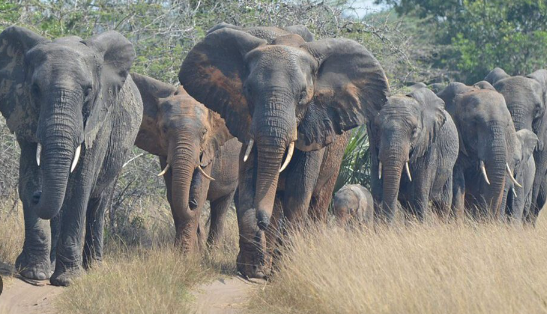
Elephants are known for intelligence, emotional depth, and advanced problem-solving abilities. Their cognitive skills help them navigate obstacles, learn from one another, adapt to changing environments, and maintain complex social relationships.
1. Understanding Intelligence in Elephants
Elephants have large, complex brains that support memory, reasoning, communication, and social awareness. They can solve physical problems, use objects as tools, recognize social cues, and respond thoughtfully to challenges in their environment.
For example, elephants may move branches, push barriers aside, or create pathways through vegetation, showing an understanding of cause and effect.
- Observe elephant behavior in natural settings
- Study how social structure supports intelligence
- Learn how elephants communicate and cooperate
- Support research on elephant cognition
2. Learning Through Observation
Elephants learn by watching experienced herd members. Young elephants observe adults finding food, locating water, using tools, and responding to danger.
This observational learning helps knowledge pass from one generation to the next, strengthening the herd’s survival skills and cultural memory.
- Support natural learning environments
- Document elephant interactions in the wild
- Encourage educational programs about cognition
- Choose ethical eco-tourism focused on conservation
3. Problem Solving in Captivity
In managed care settings, elephants often demonstrate problem-solving through enrichment activities. Puzzle feeders, hidden treats, and movable objects can encourage them to think, experiment, and use their trunks creatively.
These activities are important because they provide mental stimulation and help prevent boredom.
- Advocate for enrichment in elephant care facilities
- Use puzzles that encourage natural behavior
- Support ethical standards in captivity
- Provide environments that stimulate curiosity
4. Implications for Conservation Efforts
Understanding elephant intelligence is essential for conservation. Their ability to learn, remember, and adapt should guide habitat protection, migration planning, and human-elephant coexistence programs.
Communities that understand elephant behavior can develop better strategies to reduce conflict and protect both people and wildlife.
- Protect natural elephant habitats
- Involve local communities in conservation planning
- Support organizations preserving elephant ecosystems
- Promote coexistence strategies based on behavior
Elephant problem-solving behavior reveals the depth of their intelligence and adaptability. Protecting elephants means preserving not only a species, but also a complex social and cognitive world.
In conservation parks or educational spaces, an elephant statue can serve as a meaningful symbol of wisdom, memory, and the remarkable intelligence these animals bring to their ecosystems.