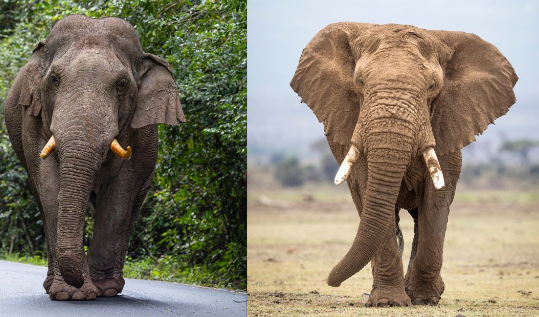
Elephants, the gentle giants of our planet, exhibit fascinating behavioral differences based on their species. The African and Asian elephants each possess unique traits shaped by their environments and social structures. Understanding these distinctions can help us appreciate these magnificent animals even more.
1. Social Structure
The social structure of African elephants is notably different from that of their Asian counterparts. African elephants primarily live in matriarchal herds led by the oldest female, who serves as the decision-maker and protector. These herds can consist of up to 50 elephants and are known for their close-knit relationships. Asian elephants, on the other hand, often have less rigid social structures and can form smaller groups that may include multiple females but rarely comprise more than 10 individuals.
Another key difference lies in the male behavior of both species. African male elephants typically leave their natal herds once they reach maturity at around 12 to 15 years, often leading a solitary lifestyle or forming loose bachelor groups. In contrast, Asian males may stay within their maternal herds longer, but eventually leave to find mates, often leading to more stable social networks.
-
- Observe elephant herds from a distance to understand their social dynamics.
-
- Research matriarchal structures in African elephants for deeper insights.
-
- Learn about male elephant behavior and its impact on social networks.
-
- Respect their space during wildlife watching for optimal experiences.
2. Feeding and Foraging Habits
The feeding patterns of African and Asian elephants illustrate their adaptation to their respective environments. African elephants are more likely to be found in open savannahs, where they consume a wide variety of grasses, leaves, and bark. Their large ears help regulate their body temperature while foraging in the sun-drenched environment. In contrast, Asian elephants, often found in forested areas, have a more herbivorous diet consisting of shrubs, fruits, and tree bark, which they readily consume using their more dexterous trunks.
Additionally, the foraging techniques of these two species differ significantly. African elephants tend to uproot trees to reach desired foliage, while Asian elephants are typically more selective, often using their trunks to tap and pull at different types of vegetation without uprooting them completely. This behavioral difference highlights how their habitats have shaped their dietary practices over time.
-
- Identify different types of vegetation preferred by each species.
-
- Experiment with feeding strategies using enrichment tools if working with elephants.
-
- Observe how elephants interact with their environments during feeding.
-
- Document feeding habits for further research or educational purposes.
3. Communication Styles
Elephants are known for their remarkable communication skills, but there are interesting variances in how African and Asian elephants convey messages. African elephants utilize a variety of vocalizations, body language, and even low-frequency infrasound to communicate over long distances. This wide array of sounds helps maintain herd cohesion and social bonds while alerting others to potential threats.
In comparison, Asian elephants also communicate through a combination of vocalizations and body language, but their range of sounds is often less diverse than that of African elephants. The use of tactile and olfactory signals tends to play a more significant role in their interactions, particularly in dense forested areas where visual communication may be obstructed.
-
- Pay attention to the different sounds made by elephants to enhance understanding.
-
- Consider how environmental factors might influence communication styles.
-
- Use a journal to note different behaviors and interactions among elephants.
-
- Participate in educational programs that focus on elephant communication.
4. Reaction to Threats
When faced with danger, African and Asian elephants demonstrate varying behavioral responses. African elephants are known for their defensive strategies, often forming a protective circle around calves and young members of the herd when threatened. Their size and group dynamics help intimidate predators, making them more effective in deterring threats like lions or hyenas. This instinct to defend their young displays their strong family bonds.
Conversely, Asian elephants might exhibit a mix of fight or flight responses. While they also protect their young, they are more likely to retreat to safety in dense forested areas if confronted by danger. Their reliance on camouflage and environmental cover identifies a survival strategy distinct from that of their African relatives, who thrive in more open landscapes.
-
- Learn how to identify signs of stress and threat in elephants.
-
- Observe the herd dynamics during potential encounters with predators.
-
- Familiarize yourself with different threats faced by both species in their habitats.
-
- Support conservation efforts that aim to reduce human-wildlife conflict.
In conclusion, recognizing the differences in behavior between African and Asian elephants enriches our understanding and appreciation of these magnificent creatures. By promoting awareness and conservation efforts, we can help protect them and their habitats for future generations. Learn more about these incredible animals and consider how you can contribute to their preservation.