Elephants are among the most intelligent and socially complex animals in the wild. Their communication methods, involving both physical and vocal signals, are vital for their survival and social interactions. By understanding these signals, we can appreciate these majestic creatures even more.
1. Vocal Communication: The Orchestra of the Wild
Elephants have a unique vocal system that includes a variety of sounds, such as trumpets, rumbles, and growls. The low-frequency rumbles, often below 20 Hz, can travel long distances, allowing elephants to communicate across vast areas. This form of communication is particularly crucial for coordinating movements within a herd, especially when locating each other in dense forests.
Interestingly, elephants can also communicate through seismic vibrations. They are able to “hear” these low-frequency sounds through the ground, which allows them to detect messages from nearby herds even if they are out of sight. This capability showcases their adaptability and intelligence in the wild.
-
- Listen for different vocalizations to understand elephant behavior.
-
- Pay attention to the context of vocal sounds during social interactions.
-
- Note the frequency and pattern of rumbles for long-distance communication.
-
- Observe how vocalizations change in response to environmental factors.
2. Physical Signals: Body Language of Elephants
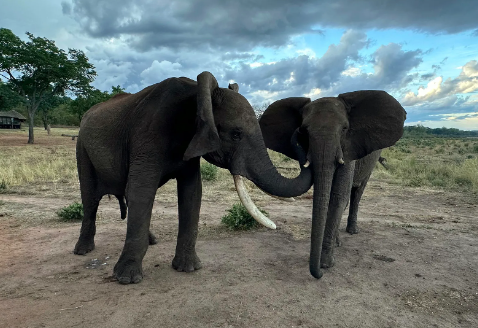
Elephants also rely heavily on body language to convey emotions and intentions. For example, a raised trunk can signify curiosity or an invitation to engage, whereas an aggressive posture, like ears held out and head lowered, might indicate a warning to stay away. This form of communication is often used within social structures, helping establish hierarchy and relationships among herd members.
<pMoreover, elephants use their bodies to express affection, often engaging in social behaviors like touching, intertwining trunks, or even rolling in mud together. These physical interactions are meant to strengthen bonds within the social group, showcasing their emotional depth and understanding of each other’s moods.
-
- Watch for specific postures that might indicate various emotions.
-
- Notice the interactions between different herd members for signs of social bonding.
-
- Record changes in body language during different environmental scenarios.
-
- Take note of how elephants use their trunks in various social contexts.
3. The Impact of Environment on Communication
The environment significantly influences how elephants communicate. For instance, in open savannas, their vocal sounds can carry farther than in dense forests, prompting different communication strategies. In areas with frequent noise, such as close to human activities, elephants may rely more heavily on physical signals to communicate, due to the interference of sound.
<pAdditionally, weather conditions can alter their communication patterns. During heavy rainfall or storms, vocal signals may become less effective, leading elephants to increase their use of visual and physical cues for interacting with one another. Understanding this relationship can help researchers develop better conservation strategies.
-
- Investigate how different environments impact elephant communication styles.
-
- Document the effects of human encroachment on elephant interactions.
-
- Monitor changes in communication patterns during different weather conditions.
-
- Evaluate the effectiveness of physical signals in denser habitats.
4. Conservation Implications of Elephant Communication
Understanding how elephants communicate has significant implications for conservation efforts. When researchers are aware of the intricacies of these interactions, they can create better environments for elephants, especially in protected areas. With informed conservation strategies, we can ensure that elephants have the space and conditions necessary to communicate effectively and thrive.
By preserving habitats and reducing human disturbances, we can enhance the chances of elephants maintaining their complex social structures. This not only benefits elephants but also enriches biodiversity, as these majestic animals play crucial roles in their ecosystems.
-
- Support research initiatives that focus on elephant communication.
-
- Advocate for protected areas that allow for natural elephant migrations.
-
- Promote public awareness about the importance of elephants in ecosystems.
-
- Encourage sustainable practices to minimize human-elephant conflicts.
In conclusion, the physical and vocal signals used by elephants reveal much about their social lives and interactions. By taking steps to learn more about these magnificent animals, we can play a role in their conservation and understanding. Consider engaging with local conservation efforts or learning more about how to protect their environments.