Keen Senses and Unique Survival Strategy
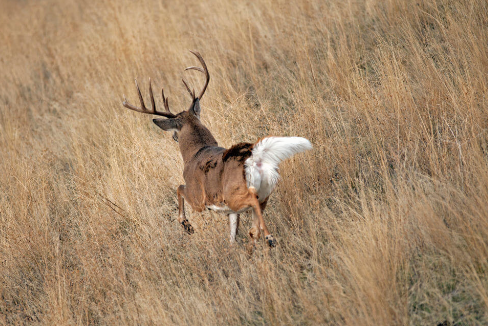
The whitetail deer, widely distributed in North America, is renowned for its exceptional alertness and adaptability. One of its most prominent abilities is its sense of smell, capable of detecting changes in odor from great distances, allowing it to proactively avoid danger. Simultaneously, the whitetail deer possesses highly developed hearing; its ears can rotate independently, quickly pinpointing the source of sound.
In contrast, its vision is more “dynamic,” exhibiting extreme sensitivity to moving objects while its ability to recognize stationary targets is relatively weak. This combination of senses forms an efficient survival mechanism, enabling the whitetail deer to thrive in environments with predators.
Hidden Patterns in Behavioral Habits
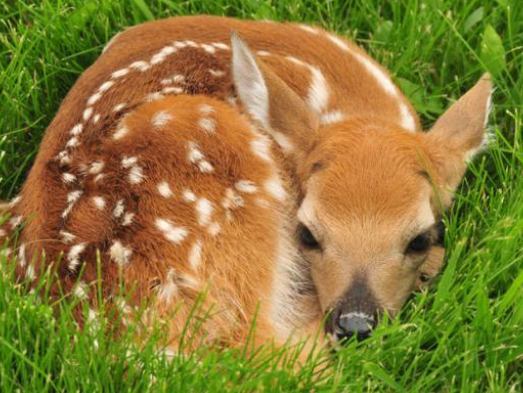
While whitetail deer are generally considered docile animals, their behavior follows clear patterns. They are typical “mealtime animals,” being most active at dawn and dusk. This timing helps reduce the risk of predation while maximizing foraging efficiency.
In terms of group structure, females and fawns tend to form stable family units, while adult males remain relatively independent outside the breeding season. This structure ensures the safety of fawns and makes the herd more flexible in the face of environmental changes. Another interesting phenomenon is that when the herd is disturbed, they quickly raise their white tails; this is not only a self-alert behavior but also a way of signaling danger to their companions.
Physical Characteristics and Natural Adaptability
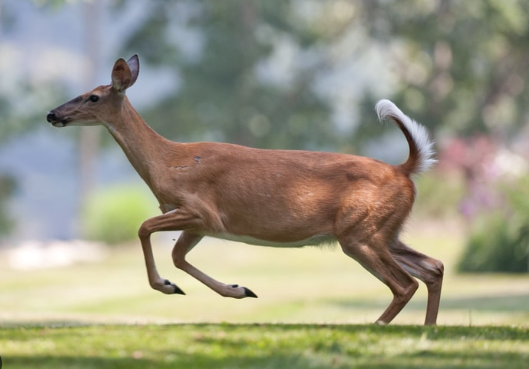
The white-tailed deer’s physical structure fully demonstrates its ability to adapt to its environment. They possess strong hind limbs, enabling rapid sprints and high leaps, which are highly effective in escaping threats. Adult white-tailed deer can run at speeds exceeding 50 kilometers per hour and possess excellent endurance.
The male’s antlers are another striking feature, shedding and regrowing annually. This process is not only related to hormonal changes but also closely linked to reproductive competition. New antlers are initially covered with soft velvet, gradually hardening over time and becoming an important tool for competing for mates.
Extension from Nature to Culture
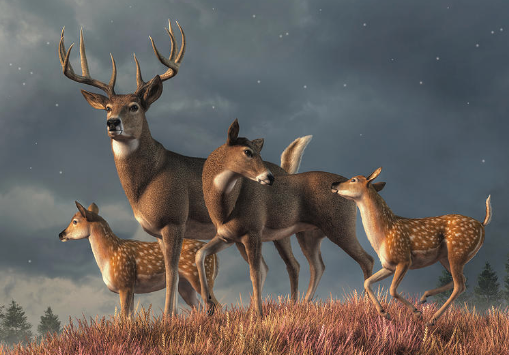
Beyond its ecological significance, the white-tailed deer also occupies an important place in human culture. They are often seen as symbols of nature, tranquility, and agility, an image that has gradually extended into art and living spaces. For example, in some courtyards or public landscapes, people place Deer Family statues to depict the harmonious relationship among deer. This expression is not merely decoration, but also an attempt to bring natural imagery into the everyday environment.