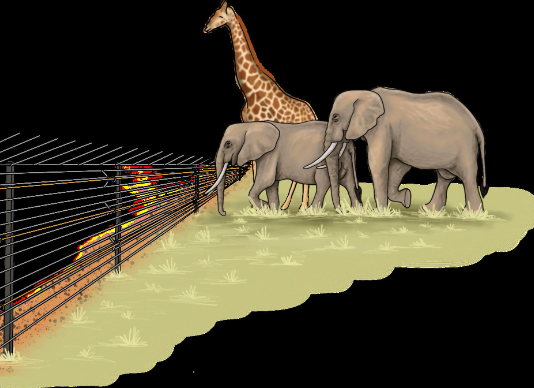
Elephants are widely recognized for their intelligence, memory, and complex social structures. However, these same traits can make managing human-elephant conflict particularly challenging. One critical area of study is how elephants respond to fences and deterrent systems—tools designed to protect crops, property, and human safety. Understanding these responses is essential for developing strategies that are both effective and humane.
1. Understanding Elephant Behavior
Elephants rely heavily on sensory input—especially smell, hearing, and vibration—to assess their environment. When encountering barriers, they do not react randomly; instead, they evaluate risk, familiarity, and potential reward.
- Younger elephants often display exploratory or risk-taking behavior, sometimes testing or attempting to breach fences.
- Older elephants, particularly matriarchs, tend to be more cautious and strategic, drawing on prior experiences.
- Herd dynamics matter—group decisions can influence whether elephants challenge or avoid a barrier.
This decision-making process resembles how one might study an elephant sculpture in detail—carefully observing posture, structure, and subtle cues to interpret meaning. Similarly, analyzing real elephant behavior requires attention to nuance rather than assumptions.
Key actions:
- Track movement patterns over time.
- Factor in herd composition and leadership.
- Support long-term behavioral research.
- Educate local communities about elephant decision-making.
2. Types of Fences and Their Effectiveness
Different fencing strategies vary in effectiveness depending on environmental and behavioral context.
- Electric fences: Deliver mild shocks; initially effective but may lose impact as elephants learn to bypass them.
- Physical barriers (trenches, thorny vegetation): Eco-friendly but not always reliable against determined elephants.
- Hybrid systems: Combining multiple barrier types often yields better results.
Elephants are capable of learning and adaptation, meaning static systems may degrade in effectiveness over time.
Best practices:
- Assess local elephant behavior before implementation.
- Combine physical and psychological deterrents.
- Maintain infrastructure consistently.
- Involve local stakeholders in planning and upkeep.
3. Deterrent Systems: Technology and Innovation
Technological advancements are reshaping wildlife management approaches.
- Audio deterrents: Use predator sounds or unfamiliar noises to redirect elephant movement.
- GPS tracking: Enables real-time monitoring of herd locations and migration patterns.
- Smart fences: Integrate sensors and cameras to detect and respond to elephant activity dynamically.
These systems shift management from reactive to predictive and adaptive, improving outcomes while reducing unnecessary harm.
Implementation considerations:
- Stay updated on emerging technologies.
- Ensure systems are practical for local use.
- Provide training for community operation.
- Continuously evaluate and refine effectiveness.
4. Collaborative Approaches: Engaging Local Communities
Sustainable solutions depend on strong community involvement.
- Local populations often possess deep ecological knowledge of elephant behavior.
- Community engagement increases acceptance and long-term success of deterrent systems.
- Education programs can reduce fear and promote coexistence.
Empowering communities transforms them from passive observers into active partners in conservation.
Strategic steps:
- Host workshops on coexistence strategies.
- Integrate traditional knowledge into planning.
- Encourage local monitoring initiatives.
- Develop incentive structures for successful coexistence.
Conclusion
Effective management of human-elephant conflict requires a multidisciplinary approach—behavioral science, engineering, technology, and community collaboration. Elephants are not merely obstacles to manage but intelligent beings whose responses must be understood and respected. By integrating adaptive systems and local knowledge, it is possible to create sustainable solutions that protect both human livelihoods and elephant populations.