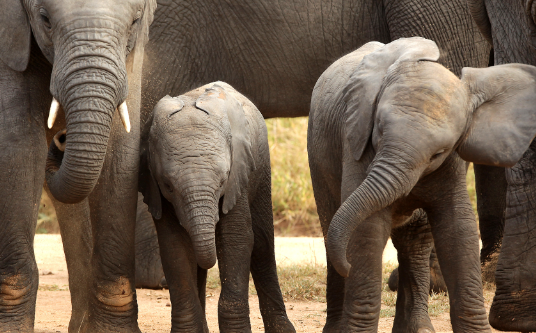
Elephants are among the most fascinating creatures on Earth, and studying them offers invaluable insights that contribute significantly to wildlife science. Their complex social structures, communication methods, and ecological impact play a pivotal role in maintaining biodiversity. By delving into elephant research, scientists can bolster conservation efforts and ensure a healthier ecosystem.
1. Understanding Social Structures
Research on elephant social structures is crucial for understanding how these majestic creatures interact and survive in their natural habitats. Elephants live in matriarchal herds, usually led by the oldest and most experienced female. These herds display intricate relationships, which include nurturing and teaching the young, as well as forming deeper bonds among adults. Studying these dynamics helps scientists learn about familial patterns and social behavior in other wildlife.
Moreover, by observing the roles within the herd, researchers can identify how social connections affect survival rates. For instance, a dominant matriarch often knows the locations of water sources and feeding grounds, making her vital for the herd’s continuity. Such observations can guide conservation programs by highlighting the importance of protecting these social structures.
-
- Observe elephant herds from a distance to avoid disturbing them.
-
- Document behaviors that indicate social bonds, such as nurturing and communication.
-
- Investigate the roles of different elephants within herds.
-
- Use non-invasive methods like camera traps to capture interactions.
2. Communication and Intelligence
Elephants are renowned for their communication skills, which include vocalizations, body language, and even infrasonic sounds that travel over long distances. This complex communication is fundamental not only for everyday interactions but also for migration patterns and social relationships within and between herds. By studying how elephants convey information, researchers can get insights into their emotional states and decision-making processes.
Furthermore, the intelligence of elephants is evident in their ability to solve problems, use tools, and exhibit emotions like grief and joy. Researching these cognitive characteristics can inform wildlife management strategies, particularly in areas where human-elephant conflicts occur. Understanding their needs and communication methods can enhance cohabitation strategies and reduce conflicts.
-
- Take note of various vocalizations and their contexts during observations.
-
- Document instances of problem-solving in both natural and controlled settings.
-
- Investigate how communication changes in different environments.
-
- Engage with local communities to educate them about elephant behavior.
3. Ecological Impact
Elephants play a critical role in shaping the ecosystems they inhabit. Often referred to as “ecosystem engineers,” they contribute to nutrient distribution, seed dispersal, and habitat modification. Their feeding habits can transform landscapes, creating water holes that benefit many other species. Researching these contributions helps scientists understand the multifaceted role elephants play in their environments.
In addition, monitoring elephant populations can serve as an ecological health indicator. A decline in elephant numbers often points to larger environmental issues, such as habitat loss or poaching. Thus, studies on elephants can drive broader conservation initiatives that protect entire ecosystems, enhancing biodiversity and ecological resilience.
-
- Conduct habitat assessments to evaluate the ecological impact of elephants.
-
- Monitor changes in plant and animal populations linked to elephant activity.
-
- Collaborate with conservation organizations to protect vital habitats.
-
- Educate the public about the ecological benefits of preserving elephant populations.
4. Conservation Strategies
Elephant research is pivotal for developing effective conservation strategies tailored to their specific needs. For instance, scientific studies can inform policies related to anti-poaching laws, habitat protection, and human-elephant conflict resolution. By identifying key threats to elephant populations, researchers can advocate for more aggressive conservation measures to mitigate these risks.
Furthermore, community involvement is essential in successful conservation efforts. Research studies that include local populations often yield better outcomes. When communities understand the ecological value of elephants, they are more likely to engage in protective measures, leading to a partnership that benefits both wildlife and human populations.
-
- Develop actionable conservation plans based on research findings.
-
- Involve local communities in conservation initiatives for better results.
-
- Promote community awareness programs about the value of elephants.
-
- Collaborate with governments and NGOs to implement conservation laws.
In conclusion, elephant research is a vital tool in advancing our understanding of wildlife science and formulating effective conservation strategies. By investing time and resources into studying these magnificent animals, we can protect not only their populations but also the ecosystems they help sustain. Consider learning more about wildlife science or getting involved in local conservation efforts to support elephants and their habitats. Your engagement can make a difference!