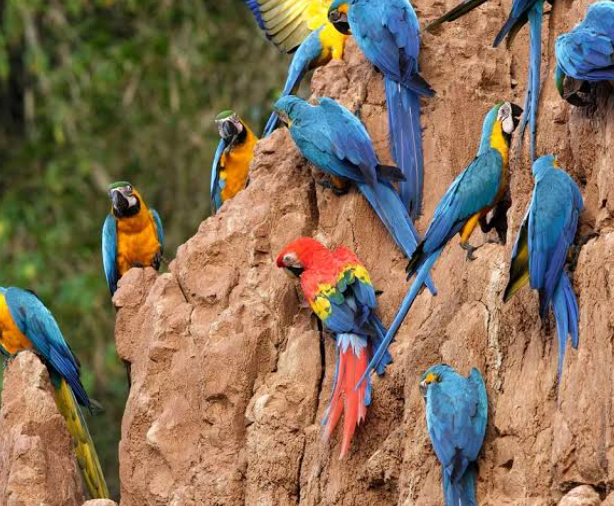
Macaws are stunningly vibrant birds known for their intelligence and social behavior. One of the most fascinating activities they engage in is gathering at clay licks, specific sites where they consume clay from riverbanks. This behavior is not just social; it plays a crucial role in their diet and health. Their vivid colors and lively flock behavior have also inspired tropical garden art, where a macaws statue can symbolize beauty, companionship, and the richness of rainforest life.
Understanding Clay Licks
Clay licks are natural formations in tropical regions, primarily found near rivers, where the earth is rich in minerals. These sites attract a variety of birds, particularly macaws, who flock there to consume the clay. The ingestion of clay is believed to help neutralize toxins from their diet, especially from certain fruits and seeds that may contain harmful alkaloids.
In addition to detoxification, the minerals found in clay provide essential nutrients that are often not present in their natural diets. Various studies have shown that these clay deposits can be rich in sodium, calcium, and magnesium, which are important for macaw health. The social aspect of gathering at these sites also helps strengthen bonds within flocks.
- Research local clay licks in areas where macaws reside.
- Visit during the early morning or late afternoon for the best sightings.
- Observe the behavior of macaws as they interact with one another.
- Take notes on the types of macaws seen at different locations.
- Consider the ecological importance of preserving these sites.
The Social Behavior of Macaws at Clay Licks
Macaws are highly social creatures, and their gatherings at clay licks are just as much about connection as they are about nutrition. Typically, different species of macaws will interact harmoniously at these sites, which is an essential part of their social structures. This mingling helps them communicate and establish social hierarchies, making it an integral activity for their well-being.
Observing these gatherings can provide insight into their social dynamics. They often engage in behaviors such as preening, vocalizations, and playful tactics that reinforce social bonds. The gathering offers more than just health benefits; it’s a vital part of their habitat and lifestyle, helping them establish a sense of community. A macaws statue showing two or more birds perched together can visually echo this social nature and highlight the strong flock connections that define these birds.
- Capture photographs or videos to document unique behaviors.
- Note the variety of species interacting at the lick.
- Identify different calls and vocalizations associated with their interactions.
- Join birdwatching groups for more insights and discussions.
- Maintain a respectful distance to avoid disturbing them.
Conservation and Importance of Clay Licks
As vital natural resources, clay licks are becoming increasingly threatened due to habitat destruction and human activities like mining and agriculture. Conserving these areas is critical not only for the macaws but for other wildlife that depend on them as well. By protecting clay licks, we help ensure the survival of various bird species and maintain the ecological balance necessary for healthy ecosystems.
Efforts are underway in many regions to raise awareness about the importance of these sites. Many conservation organizations are collaborating with local communities to protect and rehabilitate clay lick areas. Public education and involvement are crucial in these efforts, fostering a sense of responsibility towards wildlife and the environment. In nature centers, tropical resorts, or rainforest-themed gardens, a macaws statue can help draw attention to these birds and encourage conversations about habitat protection.
- Support conservation organizations working to protect clay licks.
- Advocate for sustainable land-use practices in local communities.
- Educate others about the significance of preserving natural habitats.
- Participate in local clean-up initiatives around clay sites.
- Document and report any disturbances to local conservation bodies.
Understanding the significance of macaws gathering at clay licks not only enriches our appreciation for these beautiful birds but also underscores the importance of ongoing conservation efforts. By being informed and engaged, we can contribute positively to the protection of these crucial natural resources. Through birdwatching, habitat education, conservation support, and the symbolic presence of a macaws statue in a meaningful space, more people can recognize the beauty and ecological importance of these remarkable rainforest birds.