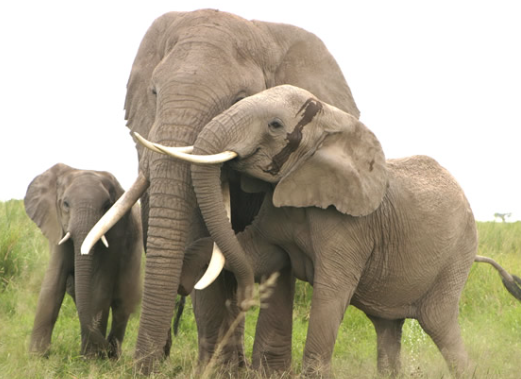
Elephants are fascinating creatures known for their complex social structures and remarkable communication skills. One of their most intriguing forms of communication involves using low-frequency sounds, or infrasound, which can travel vast distances. Understanding how these low-frequency sounds work can provide deeper insights into the behavior and ecology of elephants.
1. The Science of Infrasound
Elephants produce infrasound, sounds below 20 Hz, which are imperceptible to humans. This feature is invaluable in the dense habitats in which they often live, like forests and savannas, allowing them to communicate effectively over long distances. The sounds carry further at lower frequencies due to their longer wavelengths, making them capable of traveling several kilometers and even reaching distances of up to 10 kilometers without significant loss of clarity.
Research suggests that these low-frequency sounds can be used by elephants for various purposes, including signaling danger, coordinating movement, or even identifying the presence of other elephants. Such vocalizations may last for several seconds, allowing vital information to be communicated to others in the herd or nearby groups. This ability is a crucial element in maintaining social bonds in a population that roams over large distances.
-
- Learn about the frequency range of sound; know that infrasound lies below 20 Hz.
-
- Understand how weather conditions, like temperature and humidity, can affect sound travel.
-
- Observe elephants’ behavior during vocalizations to connect sound patterns with social interactions.
-
- Consider building awareness around your local wildlife sounds when hiking or camping, to appreciate communication in nature.
2. How Infrasound Travels
The travel of infrasound is influenced by various environmental factors. For instance, sound travels faster in warmer air compared to cold air, and humidity levels can help lower the attenuation of the sound. This means that elephants can communicate more effectively during warmer months or in areas with higher humidity, maximizing the distance their sounds can reach.
The geography of the land also plays a critical role. Flat or open areas can allow sound waves to travel farther compared to rugged terrain, which can disrupt their path. For example, in the African savanna, an elephant’s rumbles can travel long distances, while in a heavily forested area, the sound may get absorbed or blocked by the trees and foliage. Understanding these dynamics helps researchers better predict and monitor elephant behavior in different habitats.
-
- Take note of the weather conditions when observing animal communication.
-
- Explore different landscapes and see how they affect sound; visit both open and dense areas.
-
- Engage in community discussions about local wildlife and share insights about their communication methods.
-
- Consider participating in citizen science projects that involve tracking animal movements and sounds.
3. The Role of Infrasound in Elephant Communication
Infrasound serves multiple functions in elephant communication. It can indicate greetings between herds, warn of predators, or even signal reproductive readiness. This ability to convey such crucial information helps maintain the social structure within elephant groups, ensuring they can coordinate effectively when foraging or migrating.
Moreover, the “rumble” also plays a role in emotional expression. For instance, mother elephants may produce softer rumbles to comfort their calves. In turn, these rumbles signal safety and reassurance, fostering a strong emotional bond between the mother and her young. Such nuanced communication reinforces the importance of sound in the day-to-day life of elephants, both for survival and social interaction.
-
- Pay attention to the sounds made by elephants during your visits to wildlife reserves.
-
- Learn how to differentiate between different types of vocalizations and what they might mean.
-
- Document instances of elephant communication and share them with conservation organizations.
-
- Support wildlife listening stations and contribute to research on animal communications!
In conclusion, understanding elephant communication through low-frequency sounds enhances our appreciation for these magnificent animals. As we look deeper into their behaviors and interactions, let’s strive to support conservation efforts that ensure their habitats remain safe and accessible. Consider tracking local wildlife sounds, and help raise awareness about the importance of safeguarding these extraordinary creatures.