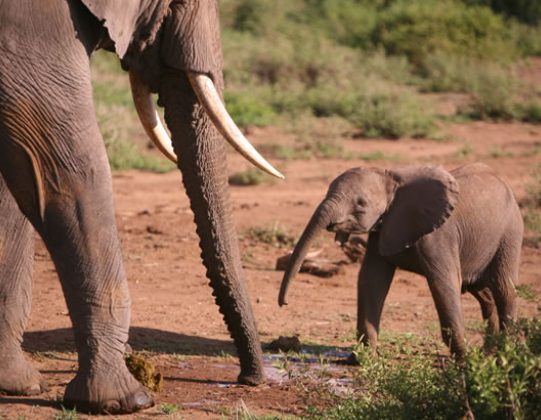
Elephants are known for their complex social lives and deep emotional bonds, especially between mothers and calves. This maternal relationship is essential for survival, learning, and emotional development, shaping not only the young elephant’s future but also the stability of the entire herd.
1. The Importance of Maternal Bonds
A mother elephant is the calf’s primary source of nourishment, protection, and emotional security. From birth, the calf depends on its mother for milk, warmth, guidance, and safety. In the early stages of life, staying close to the mother is critical because calves are vulnerable to predators, environmental stress, and separation.
As the calf matures, the mother teaches essential survival skills, including how to locate food and water, interpret social signals, and avoid danger. This guidance helps the calf gradually develop independence while remaining connected to the herd.
- Keep calves close to their mothers during early development
- Ensure mothers have access to adequate nutrition
- Provide safe environments away from major threats
- Observe mother-calf interactions to understand bonding behavior
2. Communication and Interaction
Elephant mothers and calves communicate through vocalizations, touch, and body language. Calves may use trumpets, rumbles, and distress calls to signal hunger, fear, or separation. Mothers respond with physical reassurance, vocal contact, and protective movement.
Physical interaction is equally important. Trunk touches, gentle nudges, and playful behaviors help strengthen trust and emotional connection. Play also supports the calf’s social development, teaching boundaries, confidence, and interaction skills.
- Observe vocal cues between mothers and calves
- Encourage safe social and playful interaction
- Monitor signs of stress or separation anxiety
- Support opportunities for calves to interact with peers
3. The Role of the Herd in Maternal Bonding
Elephant calves are raised within a broader social network. Female herd members, often called allomothers, may help protect, guide, and comfort calves when the mother is feeding, resting, or moving with the group.
Matriarchs also play a key role by providing leadership and ecological knowledge. Their experience helps guide the herd to food, water, and safety, indirectly supporting the mother-calf bond by strengthening the calf’s environment.
- Support communal caregiving among female elephants
- Include experienced females in protective roles
- Observe herd dynamics around young calves
- Encourage structured social time within elephant groups
4. Challenges to Maternal Bonds
Despite their strong relationships, elephant mothers and calves face serious threats. Habitat loss, poaching, drought, climate change, and human-wildlife conflict can disrupt family groups and separate calves from their mothers. These disruptions may cause long-term stress and affect calf development.
Resource scarcity can also place pressure on mothers, making it harder to provide nourishment and protection. Conservation efforts that protect habitats, migration corridors, and family groups are therefore essential to preserving these bonds.
- Support habitat and corridor protection initiatives
- Educate communities about elephant family structures
- Monitor behavioral signs of stress in mothers and calves
- Engage with wildlife protection and rehabilitation programs
The bond between elephant mothers and calves reflects the intelligence, sensitivity, and social depth of these animals. By protecting elephant habitats and family groups, people help preserve not only individual lives but also the cultural knowledge passed through generations.
In conservation centers or educational gardens, an elephant sculpture can serve as a meaningful symbol of this maternal strength, representing protection, memory, and the enduring connection between mother and calf.