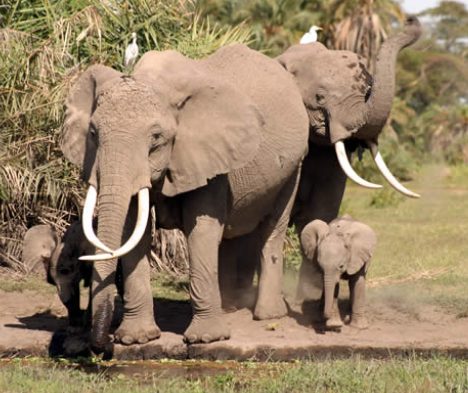
African elephants are remarkable creatures, not only for their immense size but also for their highly sophisticated social systems. Roaming the open savannas, these majestic animals demonstrate complex interactions, strong family bonds, and deeply rooted social intelligence.
The Matriarch and Her Clan
In African elephant society, the matriarch serves as the central leader of the clan, which is typically composed of her female relatives and their offspring. As the oldest and most experienced member, she holds critical knowledge about migration routes, water sources, and potential dangers.
Her leadership directly impacts the survival and wellbeing of the group, especially during harsh conditions such as droughts. Often identifiable by her larger size and worn tusks, the matriarch represents a living archive of generational wisdom. Her decisions guide the clan through the challenges of the savanna, reinforcing the importance of experience and memory in animal societies.
Communication and Social Bonds
African elephants communicate through a sophisticated mix of vocalizations, body language, and even low-frequency vibrations transmitted through the ground. These signals allow them to coordinate movement and maintain strong social connections across distances.
Their emotional intelligence is equally striking. Elephants display empathy, affection, and cooperation—whether through nurturing calves, assisting injured members, or engaging in playful interactions. In many cultural settings, these traits are symbolically represented through artistic forms such as elephant statues, which often capture their grace, strength, and deep social connections.
Dynamics of Male Elephants
Male elephants follow a different social path compared to females. Upon reaching maturity, they typically leave their maternal groups and either live independently or form loose bachelor herds.
Within these male groups, social hierarchies emerge through displays of strength and dominance. Younger males learn essential survival and social skills from older bulls, gradually establishing their position. Although they may appear solitary, their interactions are still structured and meaningful, contributing to their development into mature individuals.
The Importance of Family Units
At the core of elephant society lies the family unit. These tightly bonded groups rely on cooperation for survival, from protecting calves to locating food and water. The relationships within these units are deeply interconnected, ensuring that knowledge and behaviors are passed down effectively.
Elephants demonstrate remarkable cooperative behaviors, including shared caregiving, mutual grooming, and collective defense. They also exhibit signs of mourning, highlighting their emotional depth. These family dynamics emphasize that elephants are not solitary animals but highly social beings with strong communal ties.
Conclusion
The intricate social structure of African elephants in the savanna is a powerful example of cooperation, intelligence, and emotional depth in the animal kingdom. By understanding these dynamics, we gain a deeper appreciation for their lives and the importance of protecting their habitats.
Supporting wildlife conservation efforts and engaging with educational resources can help ensure that future generations continue to witness the extraordinary social world of these magnificent animals.