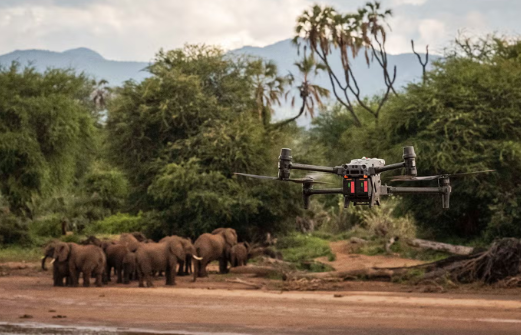
In recent years, drone technology has revolutionized wildlife observation, particularly in studying the behaviors of elephants. These magnificent creatures are often difficult to monitor due to their size, habitat, and herding instincts. With the help of drones, researchers can observe and collect data on their behavior without disturbing their natural environment.
1. Advantages of Using Drones for Elephant Observation
The use of drones opens up new avenues for tracking and observing elephants in their natural habitats. Traditionally, researchers faced challenges such as the large areas elephants roam and the limited visibility in dense forests. Drones provide a bird’s-eye view that enables researchers to see vast expanses of land and locate elephant herds without intruding.
Furthermore, drones can be equipped with high-resolution cameras and thermal imaging devices. This technology allows scientists to gather crucial information about elephants’ social interactions, feeding patterns, and migration routes, providing data that contributes to conservation efforts. By observing animals from the sky, researchers can gain insights that would be nearly impossible from the ground.
-
- Utilize drones equipped with high-resolution cameras for better image quality.
-
- Incorporate thermal imaging to monitor elephants during nighttime.
-
- Plan flight paths to minimize disturbance to wildlife.
-
- Utilize GPS technology to track migration and movement patterns.
2. Ethical Considerations in Drone Usage
While drones provide significant advantages, ethical considerations must be addressed. Elephants are sensitive creatures, and unexpected aerial intrusions may cause distress or lead to altered behaviors. It’s essential for researchers to operate drones at appropriate altitudes and distances to minimize potential stress on the animals.
Moreover, regulations regarding wildlife observation and drone usage should always be followed. The use of drones over national parks may require permits or specific operational guidelines to ensure that conservation efforts are prioritized, promoting a harmonious relationship between technology and wildlife.
-
- Always adhere to local wildlife regulations and drone flying laws.
-
- Conduct pre-flight checks to ensure the drone is functioning correctly.
-
- Respect wildlife zones to avoid disturbing elephants.
-
- Educate teams on the importance of minimizing disturbance during flights.
3. Data Collection and Analysis
The data collected from drone observations can prove invaluable for understanding elephant behavior. Researchers can analyze social structures within herds, study interactions between family groups, and observe maternal care behaviors. These insights can assist in identifying stressors affecting elephant populations, such as habitat encroachment or human interference.
Once collected, the data can be processed using specialized software tools which allow scientists to visualize patterns and trends in elephant behavior. This analysis can significantly impact conservation strategies, enabling targeted interventions and protection plans that are more accurate and effective.
-
- Utilize data analysis software to assess collected imagery.
-
- Regularly document findings for comparative studies.
-
- Share insights with conservation groups for collaborative efforts.
-
- Keep an open line of communication with local stakeholders.
4. Future Directions for Drone Technology in Wildlife Research
The future of drone technology in wildlife research is promising and full of possibilities. As technology continues to advance, drones are expected to become cheaper, more user-friendly, and equipped with better sensors. Researchers will be able to deploy drones more frequently and in varied environments, which will enhance their capability to study elephants and other wildlife.
Additionally, the integration of artificial intelligence (AI) can help in processing drone-collected data more efficiently. AI could analyze patterns in elephant behavior, predict movements, and even assist in identifying individual elephants using advanced image recognition algorithms, thereby further enriching the field of wildlife research.
-
- Stay updated on emerging drone technologies and AI advancements.
-
- Participate in workshops and training for drone operation in wildlife contexts.
-
- Engage with fellow researchers to share best practices.
-
- Consider collaborative projects with tech companies for innovation.
In conclusion, drone technology provides a powerful tool for understanding and conserving elephant populations. By utilizing drones ethically and effectively, researchers can significantly contribute to the protection of these intelligent creatures. For those interested in wildlife conservation, exploring drone technology could be a game-changer in the field.