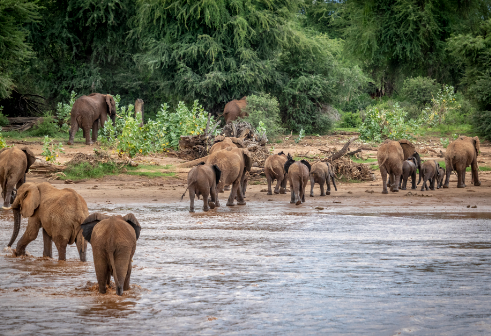
Elephants are incredible creatures that play a significant role in shaping both savanna and forest ecosystems. Their behaviors and activities can have far-reaching effects on biodiversity, vegetation, and overall ecosystem health. Understanding these impacts is crucial for conservation efforts and for maintaining ecological balance.
1. Vegetation Dynamics and Habitat Maintenance
In savanna ecosystems, elephants are recognized as “keystone species.” Their feeding habits can drastically alter the landscape. By uprooting trees and consuming a variety of plants, they prevent certain species from dominating, thus allowing for greater plant diversity. This dynamic promotes the growth of grasses, which provides sustenance for other herbivores and maintains a balanced habitat.
In forest ecosystems, elephants contribute to tree health and forest regeneration. They create clearings through their movement and feeding behaviors, which allows sunlight to reach the forest floor. This promotes the growth of understory plants and can stimulate seed germination for various plant species, enhancing forest diversity.
-
- Encourage elephant conservation efforts to maintain biodiversity.
-
- Support initiatives that educate local communities about the benefits of healthy ecosystems.
-
- Promote reforestation projects where elephants once roamed.
-
- Participate in wildlife monitoring programs to track elephant populations.
2. Waterhole Creation and Soil Management
Another significant impact of elephants on savanna ecosystems is their role in waterhole creation. When elephants dig in the ground with their tusks, they often create holes that collect rainwater in dry seasons. These waterholes become vital sources of hydration for a variety of wildlife, particularly during droughts. This behavior not only supports other species but also helps to maintain the overall health of the savanna.
Moreover, elephants contribute positively to soil health through their dung. Elephant dung is rich in nutrients, serving as natural fertilizer that promotes soil fertility. Their movements also aerate the ground, facilitating better water infiltration and root growth, which benefits various plant species in both savanna and forest ecosystems.
-
- Advocate for the protection of water sources impacted by wildlife, including elephants.
-
- Join initiatives focusing on sustainable land use to maintain soil health.
-
- Encourage local farmers to utilize natural fertilizers like elephant dung.
-
- Learn about the importance of water management in wildlife conservation.
3. Biodiversity and Ecological Interactions
Elephants positively affect animal populations as well. Their movements through different ecosystems create pathways that are used by smaller animals. For instance, many species of birds follow elephants to feed on insects disturbed during their feeding activities. These interactions foster a rich tapestry of biodiversity that supports various life forms, maintaining the health of the ecosystem.
In addition to their influence on other fauna, elephants help maintain the balance between herbivores and vegetation. By trimming tree branches and munching on leaves, they control species that could otherwise overgrow and monopolize resources. This balance is crucial for the livelihoods of numerous species sharing the same habitat.
-
- Support wildlife conservation projects that aim to enhance biodiversity.
-
- Educate yourself about the interconnections within ecosystems.
-
- Participate in community efforts to preserve habitats critical for elephants.
-
- Promote ecotourism that emphasizes responsible wildlife viewing.
In conclusion, elephants are much more than just large mammals; they are integral to the health and sustainability of savanna and forest ecosystems. Understanding their impact can help foster a deeper appreciation and commitment to conservation efforts. Consider getting involved in local conservation initiatives or wildlife monitoring programs to support these magnificent animals and their habitats.