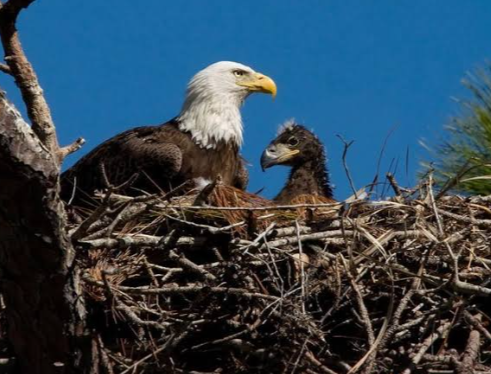
Eagles are magnificent birds known for their strength and grace, and a significant part of their life cycle involves raising young ones in the most challenging environments. Among the most striking of these places are cliffside nests, where these incredible birds raise their chicks, ensuring they grow strong and ready to take on the world.
1. The Unique Advantages of Cliffside Nests
Cliffside nests provide eagles with a strategic advantage for raising their young. The elevated location keeps chicks safe from ground-based predators such as foxes and raccoons, which can pose significant threats to their survival. Moreover, cliffs offer expansive views, allowing adult eagles to spot potential dangers while keeping a watchful eye on their chicks, a necessary trait for their safety.
Additionally, the structure of cliffside nests contributes to their durability. Eagles often build their nests using sticks, grass, and other foliage, creating a sturdy platform. The cool, elevated positions also help regulate temperature and can provide some shelter from harsh weather conditions, which is particularly important during the critical early weeks of a chick’s life.
-
- Consider the advantages of elevation when observing wildlife.
-
- Understand the predator challenges eagles face.
-
- Note the materials used in nest building for durability.
-
- Observe how location can impact temperature regulation for chicks.
2. The Nesting Process: Building to Raising
The nesting season begins with eagles returning to their established territories. A pair of eagles will often use the same nesting site year after year, adding to it and further strengthening its structure. Eagles are diligent builders—often seen gathering sticks and vegetation from their surroundings. They may even incorporate man-made materials, showcasing their adaptability.
Once the nest is completed, the female eagle typically lays one to three eggs. After about 35 days of incubation by both parents, the eggs hatch, revealing vulnerable chicks that depend entirely on their parents for food and protection. The first few weeks after hatching are critical; chicks grow rapidly and require a significant amount of food, which the parents tirelessly provide by hunting and foraging.
-
- Identify signs of nesting behavior in local eagles.
-
- Learn about the materials eagles use to build their nests.
-
- Understand the incubation period and its challenges.
-
- Observe feeding habits of the adult eagles during chick rearing.
3. The Challenges of Cliffside Living
While cliffside nests offer numerous benefits, the environment also presents unique challenges for young eagles. For one, the steep cliffs require that the chicks develop strong muscles and coordination early on, preparing them for their first flight. However, not all chicks survive this perilous journey; a fall from such heights can be fatal, making careful monitoring essential during this stage.
Weather conditions can also pose a challenge. High winds and storms can destabilize nests or even dislodge chicks. Eagles must always be alert to provide shelter from inclement weather. In extreme cases, adult eagles will stretch their wings over their young to shield them, demonstrating their protective instincts in action.
-
- Monitor weather conditions if observing eagle nests.
-
- Recognize the importance of chick fitness for survival.
-
- Be aware of the risks associated with steep cliffs.
-
- Learn about how adult eagles protect their young.
4. The Impact of Human Activity
As magnificent as eagle nests are, they are increasingly threatened by human activities. Habitat destruction due to development, such as construction and land clearing, poses a significant threat to their nesting grounds. Increased human presence can also lead to disturbances that may frighten away eagles from their nests, potentially leading to abandoned eggs or chicks.
Pollution, particularly in waterways, can affect the food sources available to eagles, impacting their ability to feed their young effectively. Moreover, climate change poses long-term challenges, including altered prey availability and changes to nesting habitats. Conservation efforts are vital to ensure that these incredible birds can continue to raise their chicks in their natural environments.
-
- Support local wildlife organizations dedicated to eagle conservation.
-
- Educate others about the importance of preserving eagle habitats.
-
- Engage in responsible outdoor activities to minimize disturbances.
-
- Advocate for policies that protect aerial migratory routes.
In conclusion, observing eagles raise their chicks on cliffside nests provides a captivating glimpse into the life of these majestic birds. Understanding the challenges and advantages they experience can enhance our appreciation of their tenacity and adaptability. By advocating for their habitats and supporting conservation efforts, we can help ensure future generations will continue to witness these stunning displays of nature. Consider getting involved with local conservation initiatives or simply spreading awareness about the importance of protecting eagles and their environments.