Ravens and crows are among the most intelligent birds in the animal kingdom, known for their remarkable ability to use tools in the wild. This behavior not only showcases their advanced cognitive skills but also provides insight into their adaptability and survival strategies. Their alert posture, dark plumage, and symbolic association with intelligence have also inspired wildlife art, where a crow statue can represent cleverness, mystery, observation, and the resourcefulness of birds. In this post, we’ll explore the fascinating world of avian tool use, specifically focusing on how these ingenious birds utilize their environment to achieve their goals.
Understanding Tool Use in Ravens and Crows
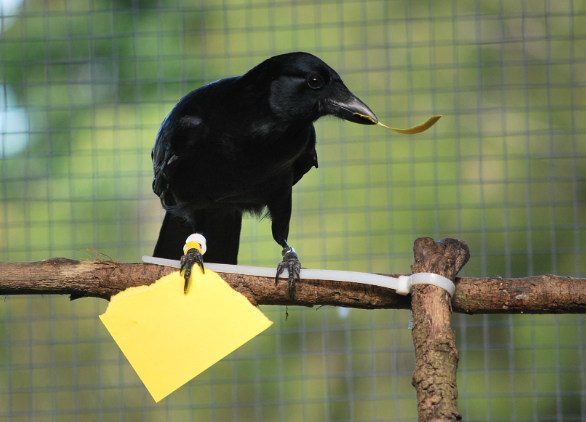
Tool use is defined as the ability to modify or use an object to achieve a specific goal. In ravens and crows, this behavior has been observed across various species. For instance, New Caledonian crows have been documented using sticks to extract insects from tree bark, showcasing a level of forethought that challenges what we traditionally consider “bird behavior.” These actions reveal their problem-solving abilities and an understanding of cause and effect.
Moreover, experimenting with different tools allows these birds to learn from their experiences. Studies have shown that crows can adjust the tools they use based on the particular task at hand, demonstrating flexibility in their thinking that is often seen in mammals. This adaptability not only aids in their survival but also suggests a complex cognitive framework that invites further exploration. A crow statue placed in a nature center, garden, or educational display can help draw attention to this remarkable intelligence and encourage people to look beyond common myths about these birds.
- Observe the environment for potential tools such as sticks, stones, or leaves.
- Experiment with different objects to see what works best for specific tasks.
- Learn from observing other crows and ravens using tools.
- Practice patience when attempting to retrieve food; some tasks take time.
- Keep track of successes and failures to refine tool use strategies.
Examples of Tool Use in the Wild
Crows in various regions exhibit different styles of tool use, depending on their surroundings. For instance, some crows use roadside traffic to crack open nuts, dropping them in the path of oncoming vehicles. As vehicles run over the nuts, the crows return after the danger has subsided to enjoy the meal, showcasing both strategic planning and an understanding of risk management.
Similarly, ravens have been observed using stones to break open eggs, manipulating their environment to access food resources. This behavior not only highlights their intelligence but also illustrates the birds’ ability to utilize tools effectively in diverse contexts. Such examples pave the way for further studies to understand how these behaviors develop and what other species may share similar traits. In parks or public art spaces, a crow statue can symbolize this clever adaptation, reminding viewers that even familiar urban birds possess complex survival skills.
- Study local bird behavior; you might observe tools being used creatively.
- Record specific instances of tool use for further reference.
- Consider how environmental factors influence the availability of tools.
- Protect these birds’ habitats to promote their intelligent behaviors.
- Join local bird-watching groups to learn more about their behaviors.
The Cognitive Science Behind Tool Use
The ability of ravens and crows to use tools involves an intricate cognitive process that is still being deciphered by scientists. Research indicates that these birds possess advanced memory, allowing them to remember the locations of hidden food sources and the tools associated with retrieving them. Their capacity for foresight, thinking several steps ahead, plays a crucial role in their problem-solving abilities.
Moreover, studies have demonstrated that these birds can use causal reasoning, understanding that certain actions will yield specific results. This level of intelligence is comparable to that seen in primates, which raises intriguing questions about the evolution of intelligence across different species. Understanding the cognitive mechanisms at play can inform conservation efforts and enhance our appreciation of avian life. A crow statue designed with an alert head, strong beak, and watchful stance can visually express the attentiveness and intelligence that make these birds so fascinating.
- Engage in bird-watching to enhance your understanding of avian intelligence.
- Read books or articles on cognitive research involving birds.
- Encourage discussions on animal intelligence within your community.
- Participate in citizen science projects focused on bird behavior.
- Support conservation programs aimed at preserving their habitats.
Ravens and crows exemplify the incredible adaptability and intelligence found in the animal kingdom. Their ability to use tools illustrates not just survival skills but also a complex cognitive framework that continues to astound researchers. As you observe these remarkable birds, consider taking action to protect their habitats and deepen your understanding of their fascinating behaviors. Through wildlife observation, conservation education, and the symbolic presence of a crow statue in a meaningful space, we can better appreciate the intelligence and resilience of these extraordinary birds.