Elephants are among the most adaptable large mammals on Earth, capable of surviving in some of the harshest arid environments. Their intelligence, social organization, and behavioral flexibility allow them to cope with limited water, scarce vegetation, and extreme temperatures. Examining these survival strategies reveals not only their resilience but also their essential ecological role within dryland ecosystems.
1. Water Conservation Techniques
Water scarcity is one of the greatest challenges elephants face in arid regions. To survive, elephants rely heavily on their exceptional memory and highly developed sense of smell, which enables them to detect distant water sources and relocate seasonal watering holes used across generations.
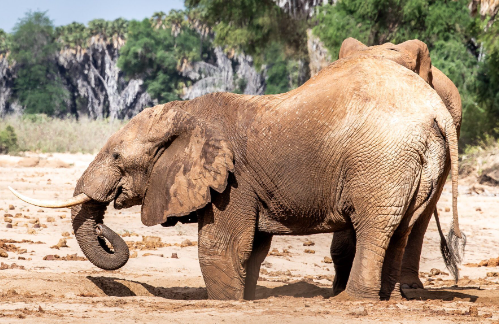
Behavioral adaptations also help minimize water loss. Elephants are typically more active during cooler hours, such as early morning and evening, reducing heat stress during peak daytime temperatures. Mud bathing and dust coating serve additional purposes by cooling the body, protecting the skin from sun exposure, and reducing parasite irritation.
- Visit watering areas during cooler parts of the day
- Observe reduced midday activity as a conservation behavior
- Learn about local water systems and elephant habitats
- Support initiatives protecting natural water sources
2. Nutritional Adaptations
Arid landscapes often provide limited and inconsistent vegetation, yet elephants maintain survival through dietary flexibility. They consume grasses, leaves, bark, roots, and shrubs depending on seasonal availability. Their large molars are specifically adapted for grinding tough, fibrous plant material.
Elephants may travel long distances to locate food resources, enabling them to utilize diverse habitats throughout the year. Their substantial daily intake helps sustain the immense energy demands of their large bodies, even in nutritionally challenging environments.
Additionally, elephants contribute to ecosystem health by dispersing seeds and shaping vegetation patterns across the landscapes they inhabit.
- Study regional plant species used by elephants for feeding
- Encourage habitat restoration with native vegetation
- Educate communities about elephants’ ecological roles
- Support sustainable land-use and grazing practices
3. Social Structures and Cooperative Behavior
Elephants live within highly organized social groups led by experienced matriarchs. These family structures are essential for survival in arid conditions, where knowledge about food, migration, and water availability determines success.
Younger elephants learn survival strategies directly from older herd members through observation and participation. Cooperation within the herd strengthens protection, resource sharing, and emotional support during stressful conditions such as drought or migration.
Group behaviors like mud-wallowing and coordinated travel also reinforce social bonds, improving overall resilience and herd stability.
- Observe herd interactions and leadership dynamics
- Support conservation policies protecting elephant families
- Raise awareness about elephants’ social intelligence
- Help combat poaching that disrupts herd structures
4. Migration and Adaptive Movement Patterns
Migration is one of the most critical survival mechanisms for elephants living in dry regions. Seasonal movement allows them to follow rainfall patterns, locate vegetation, and access reliable water sources. These migration routes are often deeply rooted in generational memory and ecological knowledge.
Elephants also play an important ecological role during migration by dispersing seeds, opening pathways through vegetation, and influencing plant diversity. However, habitat fragmentation, agriculture, and urban expansion increasingly threaten these traditional routes.
Protecting migration corridors is therefore essential not only for elephant survival but also for maintaining ecosystem balance across large landscapes.
- Study historical migration routes and seasonal movement
- Advocate for wildlife corridors and protected habitats
- Educate communities about migration benefits
- Encourage responsible land-use planning near migration areas
Elephants demonstrate extraordinary adaptability in arid environments through intelligence, cooperation, mobility, and ecological awareness. Their survival strategies reflect millions of years of evolution and highlight the delicate relationship between wildlife and habitat preservation.
In some conservation centers and cultural spaces, an elephant sculpture is used as a symbolic reminder of these animals’ strength, memory, and enduring journeys across some of the world’s most challenging landscapes.