Elephants are remarkable creatures known for their intelligence, complex social structures, and impressive long-distance migrations. Understanding how they navigate these vast journeys provides insight into both their behavior and the broader ecological systems they influence. Below is a structured look at the mechanisms guiding elephant migration.
1. The Role of Memory
Elephants possess highly developed cognitive abilities, particularly in long-term spatial memory. Within herds, matriarchs—typically the oldest females—serve as repositories of ecological knowledge. They recall migration routes, seasonal water sources, and safe feeding grounds, sometimes spanning decades.
During extreme conditions such as drought, this memory becomes critical. Matriarchs can lead herds to distant, previously visited waterholes that younger members have never encountered. This is not merely individual recall; it is reinforced through social transmission, ensuring that survival strategies persist across generations.
- Prioritize leadership roles for experienced matriarchs
- Record and analyze migration paths for conservation data
- Encourage social cohesion to strengthen knowledge transfer
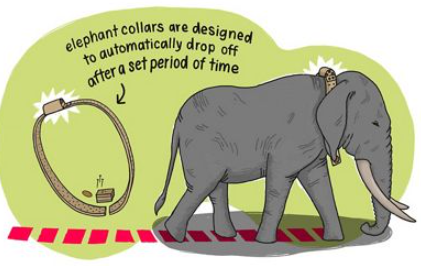
- Apply GPS tracking to validate historical routes
2. Environmental Cues
Beyond memory, elephants interpret environmental signals with high sensitivity. They track vegetation changes, detect water through scent, and observe patterns in other wildlife. These cues help refine their routes in real time.
A particularly advanced adaptation is their ability to perceive infrasound—low-frequency vibrations that travel over long distances. Through this, elephants can detect distant storms, locate water, and maintain communication with other herds beyond visual range. This sensory capacity enhances both navigation precision and group coordination.
- Monitor environmental shifts and vegetation patterns
- Observe interspecies behavioral signals
- Use remote sensing tools to map environmental cues
- Study migration corridors directly for field insight
3. Social Dynamics and Herd Structure
Elephant herds are matriarchal and highly cooperative. Navigation is not an isolated skill but a collective process shaped by leadership and social learning. The matriarch integrates her memory with group input, making adaptive decisions based on both past knowledge and present conditions.
Younger elephants learn by participation—observing routes, behaviors, and responses to environmental changes. Over time, this builds a distributed intelligence within the herd, ensuring resilience even as individuals age or conditions shift.
- Maintain stable leadership within herds
- Encourage experiential learning among younger elephants
- Strengthen group cohesion to enhance decision-making
- Study herd composition to understand migration efficiency
4. The Impact of Climate Change and Human Activity
Modern challenges increasingly disrupt traditional migration patterns. Climate change alters rainfall cycles and vegetation availability, while human expansion fragments habitats. Infrastructure such as roads and fences can block established routes, forcing elephants into suboptimal or dangerous paths.
Conservation strategies now focus on preserving migration corridors, mitigating human-elephant conflict, and integrating local communities into wildlife management efforts. These approaches are essential for maintaining both elephant populations and the ecosystems they help sustain.
- Support corridor preservation initiatives
- Raise awareness about climate impacts on wildlife
- Engage local communities in coexistence strategies
- Advocate for policy protections on migratory routes
Understanding elephant migration is not only about animal behavior—it is about sustaining ecological balance. Elephants act as ecosystem engineers, shaping landscapes through their movement and feeding patterns.
In some conservation centers and educational spaces, this connection is symbolically represented through an elephant sculpture, serving as a visual reminder of their enduring journeys and the importance of protecting the pathways that sustain them.