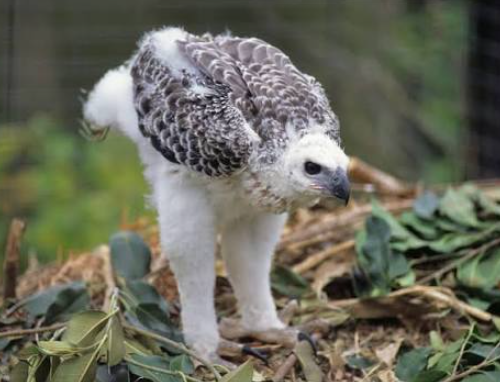
The Crowned Eagle, a majestic raptor known for its exceptional hunting skills, is a remarkable species found primarily in the dense forests of Central and Southern Africa. This eagle’s hunting techniques and adaptations to dense habitats make it a fascinating subject for bird watchers and nature enthusiasts alike. In this blog post, we will delve into the hunting prowess of the Crowned Eagle and explore its unique strategies for surviving in dense forests.
1. The Anatomy of a Hunter
The Crowned Eagle boasts a powerful body structure that enhances its hunting capabilities. With a strong beak and sharp talons, it is well-equipped to catch a variety of prey, including monkeys and small mammals. Measuring up to 1 meter in length, these eagles have keen eyesight and can spot movement from significant distances, even in thick foliage. This visual acuity is essential for spotting potential food in dense underbrush.
In addition to physical attributes, the Crowned Eagle has developed remarkable hunting techniques. It prefers to ambush its prey, often using the element of surprise to its advantage. It will perch silently in a tree, waiting for the right moment to strike. This stealthy approach, combined with its strong flight capabilities, enables the eagle to infiltrate its habitat effectively and successfully hunt in environments where many other predators might struggle.
-
- Observe the eagle’s flight patterns for effective hunting techniques.
-
- Research the anatomy of crowned eagles to understand their capabilities.
-
- Take note of their preferred hunting times; they are usually more active at dawn and dusk.
-
- Consider the wildlife present in their habitat for better insight into their prey.
2. Hunting Techniques in Dense Forests
The Crowned Eagle employs various hunting techniques that are tailor-made for navigating dense forests. One of its primary strategies is to utilize its tree perch height, allowing it to survey a wide area below for any signs of movement. This vantage point is crucial for spotting prey while remaining camouflaged among the leaves and branches.
Additionally, the Crowned Eagle often engages in a behavior called “still hunting,” where it waits motionless for an extended period. By minimizing movement, the eagle can catch smaller animals off guard, ensuring its success. When the moment is right, it can launch itself from its perch, covering impressive distances and closing in on its target with speed and precision.
-
- Find elevated observation points to spot hunting behaviors.
-
- Practice patience; the eagle’s still hunting may take time.
-
- Learn about the types of prey present in their territory.
-
- Observe how varying foliage affects their hunting strategy.
3. Adaptations to Environmental Challenges
The Crowned Eagle has adapted to thrive in the often challenging environments of dense forests. One of its most significant adaptations is its feather structure, which aids in silent flight. This allows the eagle to glide undetected above the forest floor, crucial for both hunting and avoiding competition. These silent wings enable it to approach prey without alarming them, which is essential for successful ambushes.
Moreover, the Crowned Eagle is also highly territorial, which is key to its hunting success. By establishing a hunting territory, it ensures that there is a sufficient supply of prey within its domain. This behavior not only reduces competition but also allows it to optimize its hunting efficiency, ensuring food availability throughout various seasons.
-
- Identify the preferred hunting grounds of Crowned Eagles for tracking.
-
- Learn about their tracking behavior and territory range.
-
- Document the effects of weather on their hunting success.
-
- Research local conservation efforts to protect their natural habitats.
Understanding the hunting techniques and adaptations of the Crowned Eagle is essential for appreciating its role in the ecosystem. Whether you are an avid bird watcher or simply curious about wildlife, taking the time to observe and learn about this magnificent raptor can enrich your experiences in nature. Embrace the exploration of their dense forest habitats, and consider supporting conservation initiatives that safeguard these incredible creatures and their environments.