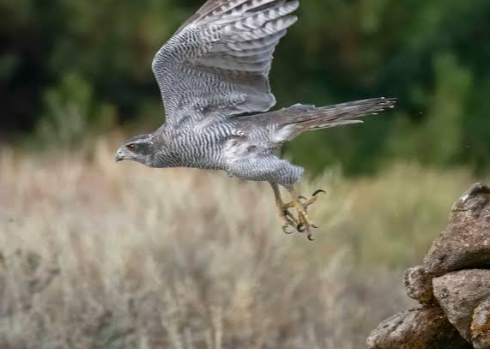
The Northern Goshawk, a master of stealth and speed, reigns as one of the most efficient forest predators in the avian world. Known for its keen eyesight and remarkable aerial agility, this bird has adapted to thrive in dense wooded environments. Let’s delve deeper into the fascinating characteristics, hunting techniques, and conservation efforts surrounding this incredible raptor.
1. Physical Characteristics of the Northern Goshawk
The Northern Goshawk (Accipiter gentilis) is a large bird of prey, known for its striking appearance. They typically measure between 18 to 24 inches in length with a wingspan of 3.3 to 4.6 feet. Their plumage is predominantly gray with horizontal white barring on the underside, aiding in camouflage among trees and foliage. Males are generally smaller than females, which is a common trait among many bird species.
These birds possess sharp talons and a strong beak designed for tearing flesh, making them efficient hunters. Their broad wings allow for powerful, agile flight through wooded areas. Northern Goshawks also have an exceptional vision; they can spot prey from significant distances, a crucial advantage when navigating their forested habitats.
-
- Identify the physical traits: gray plumage, strong beaks, sharp talons.
-
- Note the size difference: males are smaller than females.
-
- Observe their flight: powerful and agile through trees.
-
- Understand camouflage: their colors help them blend in.
2. Hunting Techniques and Behavior
The Northern Goshawk employs unique hunting strategies that showcase its prowess as a forest ambush predator. They primarily hunt birds and small mammals, utilizing their speed and agility to navigate through dense foliage. Goshawks often perch silently on branches, waiting patiently for unsuspecting prey to come within striking distance. When ready to attack, they can accelerate rapidly, using bursts of speed to capture their targets.
Additionally, these birds are known for their impressive aerial maneuvers. They can dodge and weave through trees, a skill that proves vital in forested environments. Once they catch sight of prey, they engage in a short, high-speed chase, often employing surprise and stealth to secure a meal.
-
- Watch for sitting and waiting: they often perch silently.
-
- Recognize their speed: quick acceleration helps in capturing prey.
-
- Admire their aerial finesse: they perform intricate maneuvers.
-
- Note prey preferences: birds and small mammals are their primary targets.
3. Habitat and Range of the Northern Goshawk
Northern Goshawks are typically found in mature forests, often preferring coniferous and mixed woodlands. Their distribution spans across North America, Europe, and Asia. These birds thrive in habitats that are rich in biodiversity and provide ample hiding spots for both predator and prey. In North America, they are often spotted in the northern regions, migrating southward in colder months as needed.
Preserving their habitat is crucial for their survival. They require large territories for nesting and hunting, which puts them at risk in areas where forested regions are being developed. As a result, conservation efforts focus on maintaining healthy woodlands and monitoring populations to ensure the sustainability of this raptor.
-
- Recognize the preferred habitats: mature coniferous and mixed forests.
-
- Identify the regions: primarily found in northern climates.
-
- Support conservation efforts: promote the protection of forests.
-
- Stay informed about migration patterns: know when they move south.
4. Conservation Status and Threats
The conservation status of the Northern Goshawk varies regionally; however, they face several common threats. Habitat loss due to deforestation is one of the main challenges, as it reduces their hunting grounds and nesting sites. Additionally, disturbances from human activity, such as urban development and logging, further endanger their populations.
Some regions employ regulations to protect nesting sites and manage forest resources more sustainably. Conservationists also emphasize the significance of preserving natural ecosystems, which is vital to maintaining a balanced population of both prey and predator species. Restoration projects aim to create healthier environments that can support diverse wildlife.
-
- Understand the threats: habitat loss, human disturbances.
-
- Advocate for sustainable forestry: support responsible logging practices.
-
- Participate in conservation programs: join local wildlife protection efforts.
-
- Spread awareness: educate others about the importance of preserving habitats.
In summary, the Northern Goshawk is an extraordinary forest ambush predator that showcases incredible adaptations for survival and hunting. Understanding their behaviors, habitats, and conservation needs is essential for ensuring their future. If you’re inspired to help, consider getting involved in local conservation initiatives that protect these magnificent birds and their habitats.