Toucans are known for their vibrant colors and strikingly large beaks, but these features are not just for show. Their beaks play a crucial role in their survival in the rainforest ecosystem. In this post, we’ll delve into the fascinating relationship between toucan beaks and their survival strategies, focusing on feeding, social interactions, and environmental adaptations.
1. The Role of Beaks in Feeding
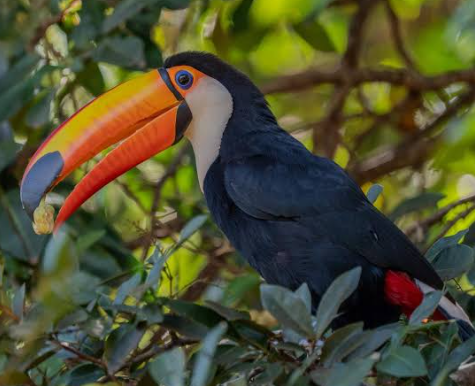
The toucan’s beak, which can be over half the length of its body, is an incredibly efficient tool for getting food. These birds primarily eat fruits, which make up the bulk of their diet, and their beaks help them reach and consume a variety of fruit that would be otherwise inaccessible. The serrated edges of the beak allow for easy tearing, and its lightweight structure enables the toucan to maneuver easily among the branches of trees.
In addition to fruits, toucans eat insects, small mammals, and even bird eggs, though these require a different approach using their beaks. For example, the toucan can leverage its beak to pry open the nests of smaller birds. This ability highlights how adaptable toucan beaks are, allowing for a diverse diet that is essential for their survival in the crowded and competitive rainforest environment.
-
- Understand the importance of a varied diet for toucans.
-
- Observe how toucans use their beaks to interact with their food.
-
- Note the difference in diet depending on the local ecosystem.
-
- Learn about the types of fruits that are favored by toucans.
2. Social Interactions and Mating
Toucan beaks also serve an essential role in social interactions among their species, particularly during mating rituals. The size and brightness of a male’s beak can attract females, signaling health and genetic fitness. During courtship, toucans engage in various displays, including showing off their beaks while bobbing and weaving among branches, making their vibrant colors stand out against the green foliage.
Moreover, beaks are involved in social bonding. Toco toucans, for instance, often engage in mutual preening, where they use their beaks to groom one another. This behavior helps strengthen social bonds within their flocks, which is vital for survival as toucans often rely on group living for protection against predators. Building these social connections can enhance their chances of successfully raising offspring and navigating the challenges of the rainforest.
-
- Observe toucans’ behavior during mating season.
-
- Note the significance of beak size and color in social interactions.
-
- Understand how group living benefits toucan survival.
-
- Learn about the grooming behaviors between toucans.
3. Environmental Adaptations
The adaptation of toucan beaks to their rainforest environment is a testament to evolutionary design. The large, colorful beak is not only functional but also well-suited to camouflage among the lush foliage, helping to protect toucans from predators. Additionally, the beak’s structure allows for temperature regulation; toucans can dissipate heat by allowing blood to flow through their beaks, which is particularly important in the hot, humid climate of the rainforest.
Further, toucans are often seen resting and scanning their surroundings from high perches. Their beak allows them to maintain a wide field of vision while remaining concealed among leaves. This adaptation is crucial for spotting potential threats, whether from predators or from competing species. Such subtle but effective adaptations ensure toucans thrive amid the challenges of their environment.
-
- Recognize the importance of beak color in camouflage.
-
- Watch for signs of temperature regulation in toucans.
-
- Learn how toucans use their environment to their advantage.
-
- Observe their posture and perch selection as a survival strategy.
Understanding toucan beaks is not just an academic endeavor; it deepens our appreciation for these magnificent creatures and their role in the rainforest ecosystem. By recognizing how these versatile tools support their diets, social behaviors, and environmental adaptations, we can better understand the intricate connections that sustain life in these biodiverse habitats. As rainforest ecosystems face various threats, educating ourselves and others about their inhabitants can contribute to their conservation.
In conclusion, toucan beaks are a fascinating topic that showcases nature’s ingenuity. By taking the time to observe these birds and understand their habits, you can contribute to their protection and appreciation in the wild. Whether through sharing knowledge, supporting conservation efforts, or visiting natural parks, your engagement can help ensure that toucans and their vibrant ecosystems continue to thrive.