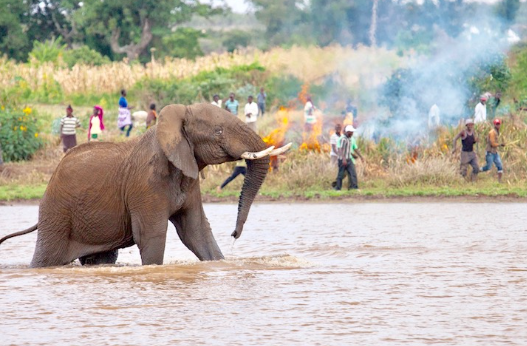
The coexistence of humans and elephants in rural settlements presents both opportunities and challenges. As human populations expand and encroach on elephant habitats, conflict has become an increasingly pressing issue, affecting both communities and wildlife.
Understanding the behaviors of elephants and the circumstances under which conflicts arise can lead to effective strategies for prevention and management.
1. Understanding Elephant Behavior
To address human-elephant conflict, it is crucial to understand the natural behavior of elephants. Elephants are social creatures and often travel through established routes in search of food and water. These pathways may intersect with agricultural areas or human settlements, leading to encounters that can be damaging to crops and property.
Elephants also display different behaviors depending on their environment. In densely populated areas, they may become more aggressive as they feel threatened by humans. Recognizing these behavioral patterns can help communities take proactive steps in minimizing conflict.
-
- Educate the community about elephant behavior.
-
- Observe elephant movement patterns in your area.
-
- Keep a safe distance if you encounter an elephant.
-
- Do not provoke or feed elephants.
-
- Engage with local wildlife organizations for support.
2. Damage to Agriculture and Property
Elephants can cause substantial damage to crops, which not only impacts food security but also local economies. Incidents have been reported where entire fields of maize or rice are flattened overnight by foraging elephants. Such destruction can lead to financial losses for farmers and heighten tension between wildlife and human communities.
Property damage can also occur when elephants invade villages or settlements. They may break fences or properties in search of food, leading to an emotional toll on residents who fear repeated occurrences. Establishing buffer zones or utilizing deterrents can greatly reduce these interactions.
-
- Plant elephant-resistant crops, such as chili peppers.
-
- Build sturdy barriers around fields.
-
- Utilize noise-making devices or flashing lights at night.
-
- Encourage community-based farming practices.
-
- Report any elephant sightings to local authorities.
3. Prevention and Management Strategies
Effective management of human-elephant conflict requires a combination of community engagement and practical solutions. One successful approach is the implementation of early warning systems that inform farmers of nearby elephant movements, allowing them to take preventive action.
Another strategy involves creating community-led wildlife management committees that engage in training and educational programs related to coexistence. These committees can foster communication between farmers and wildlife experts, leading to more robust community resilience against conflict.
-
- Form or join local wildlife management committees.
-
- Attend workshops on human-wildlife coexistence.
-
- Install and maintain early warning systems.
-
- Share successful conflict deterrent strategies with neighbors.
-
- Document and report incidents of elephant encounters.
4. Emphasizing Community Involvement
Community involvement is vital in addressing human-elephant conflict. Grassroots efforts often yield more practical solutions tailored to local circumstances. Engaging local residents in surveys and discussions about elephant movement patterns allows them to contribute essential knowledge that can help inform management plans.
Additionally, fostering a sense of stewardship among community members can shift the narrative from viewing elephants as threats to seeing them as irreplaceable parts of the ecosystem. This shift can lead to greater support for conservation initiatives and improved relationships within the community.
-
- Host community meetings to discuss elephant issues.
-
- Encourage sustainable agricultural practices.
-
- Promote conservation initiatives that involve local stakeholders.
-
- Support local artisans and businesses that emphasize wildlife conservation.
-
- Create educational materials on coexistence for the community.
5. Collaborating with Conservation Organizations
Collaboration with conservation organizations can provide valuable resources for managing human-elephant conflict. These organizations often have expertise in wildlife behavior and conflict resolution techniques. Their involvement can also help secure funding for community projects aimed at mitigating conflict.
Working alongside conservationists can introduce innovative solutions, such as eco-friendly deterrent systems or habitat restoration efforts, which benefit both elephants and local communities. Establishing partnerships can lead to long-term strategies for coexistence and wildlife conservation.
-
- Reach out to local wildlife conservation groups.
-
- Participate in collaborative projects or volunteer opportunities.
-
- Request support for training on elephant management.
-
- Share success stories with conservation organizations to garner attention.
-
- Advocate for policies that support wildlife conservation initiatives.
In conclusion, understanding human-elephant conflict near rural settlements is crucial for fostering coexistence. By implementing practical solutions, encouraging community involvement, and collaborating with conservation organizations, we can work towards sustainable strategies that benefit both humans and wildlife. Take the initiative today and explore ways to support these efforts in your community.