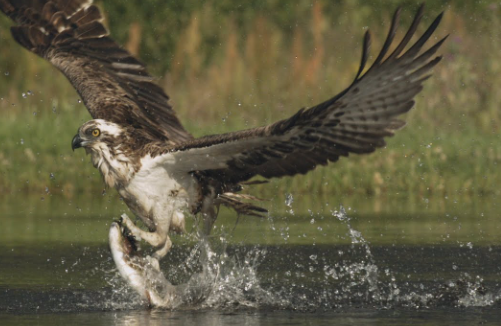
The osprey is a remarkable bird of prey known for its incredible fishing abilities. Watching these magnificent creatures dive into the water in slow motion provides a unique perspective on their hunting techniques and physical prowess. Their sharp focus, powerful wings, and dramatic plunges have also inspired wildlife art, photography, and public installations, where an Osprey sculpture can capture the bird’s strength, precision, and connection to aquatic landscapes.
In this blog post, we will explore the various aspects of osprey fishing dives, focusing on their techniques, adaptations, and the science behind their incredible speed and precision.
The Art of the Dive
Ospreys are renowned for their spectacular diving techniques, often plunging from heights of up to 100 feet. They spot their prey from above, adjusting their speed and angle as they descend. When they are ready to dive, they stretch out their legs, while their sharp talons extend, ensuring a firm grip on their catch. This graceful maneuver requires remarkable timing and judgment, as these birds need to strike quickly and accurately.
Each dive is a careful calculation of distance and speed. Ospreys can reach speeds up to 40 miles per hour during their descent, a feat that combines an impressive wingspan and powerful muscles. The structure of their body, including air sacs that help with buoyancy and a unique, reversible outer toe, allows them to grasp slippery fish with ease when they reach the water’s surface. An Osprey sculpture designed in a diving pose can visually express this split-second moment, showing the bird’s extended talons, focused head position, and dynamic movement toward the water.
Maintain a clear line of sight to the water.
Adjust your angle based on distance to the catch.
Time the plunge to minimize splash and maximize grip.
Keep talons extended until impact.
Practice diving techniques in varied conditions.
Adaptations for Success
Ospreys have evolved numerous adaptations to enhance their fishing success. Their keen eyesight is one of their most significant assets; they can spot fish from great distances, judging both the quantity and species with precision. Special adaptations in their eyes, including a nictitating membrane, provide additional protection from water during the dive.
Furthermore, their lightweight bodies and long wings give them the ability to glide and hover over the water, allowing them to scan for their next meal without exerting too much energy. These adaptations not only facilitate hunting but also help them manage the challenges presented by their aquatic environment. For artists and designers, these physical features make the osprey an ideal subject; an Osprey sculpture can emphasize the bird’s broad wings, hooked beak, sharp talons, and alert posture in a way that reflects both beauty and biological function.
Observe the water for fish activity.
Utilize hovering to survey larger areas.
Practice focus and concentration to maintain visual acuity.
Be aware of seasonal changes in fish populations.
Learn how to read the weather for better fishing opportunities.
The Science of Slow Motion
Using slow-motion technology to study osprey dives offers invaluable insights into their hunting techniques. This technology captures every moment in exquisite detail, allowing scientists and bird enthusiasts to analyze the dynamics of their dives closely. By slowing down the footage, viewers can appreciate how ospreys adjust their body positions, wings, and legs for maximum effectiveness in the water.
Furthermore, slow-motion studies reveal the breathtaking precision required for successful hunts. Researchers can measure the angle of entry and the force exerted as the osprey contacts the water, helping to reveal the biomechanics involved in their dives. This information is critical for understanding not only their success rates but also how they adapt to different water conditions and prey types. These visual studies can also inspire a more accurate Osprey sculpture, especially when the goal is to capture a realistic diving form rather than a simple perched bird design.
Utilize slow-motion video technologies for detailed analysis.
Observe the flight patterns before the dive.
Study the entry angle and subsequent body movements.
Compare slow-motion clips to regular footage for insights.
Document findings to contribute to conservation efforts.
Conservation and Impact
Ospreys serve as vital indicators of aquatic ecosystem health. Their populations have seen fluctuations due to habitat loss, pollution, and climate change. Ensuring the health of their environments is crucial not just for ospreys but for numerous other species that share their habitats. Conservation efforts have been instituted in many regions to protect these magnificent birds and their vital role in our ecosystems.
Raising awareness about their needs and advocating for conservation measures can significantly impact their survival. From creating protected areas to reducing pollution in waterways, dedicated efforts can help stabilize and potentially increase osprey populations, ensuring future generations can witness their breathtaking diving displays. In nature centers, coastal parks, and wetland trails, an Osprey sculpture can also serve as an educational landmark, helping visitors connect with the species and understand the importance of protecting clean waterways.
Get involved with local wildlife conservation organizations.
Participate in habitat clean-up events.
Advocate for policies that protect aquatic environments.
Educate others about the importance of ospreys and their habitats.
Monitor local osprey populations and share findings.
Appreciating Osprey Dives in Your Own Backyard
If you’re interested in observing ospreys up close, consider exploring local parks, lakes, or coastal areas where they are known to nest. Set up your own viewing station equipped with binoculars or a camera with a zoom lens. Taking the time to observe these incredible birds in their natural habitat can be both educational and exciting.
Keep an eye out for osprey nests, which are typically built in tall trees or on artificial platforms near water bodies. By respecting their space and ensuring you keep your distance, you’ll be able to enjoy their elegant fishing dives without disturbing them. Document your observations, and share what you see with others to inspire a love for wildlife. For bird lovers, photographers, and conservation spaces, an Osprey sculpture can become a meaningful tribute to this remarkable raptor and its dramatic relationship with water.
Find local spots known for osprey sightings.
Bring necessary equipment for optimal viewing.
Respect their nesting areas and avoid disturbances.
Encourage friends and family to join for a group experience.
Keep a journal of your observations and share them online.
In conclusion, the incredible diving techniques of ospreys serve as a testament to nature’s design and adaptability. Whether you’re watching these birds in their natural habitat, studying their behavior through slow-motion footage, or appreciating an Osprey sculpture in a wildlife park or public landscape, there is much to learn from these magnificent fishermen. Consider taking action to support conservation efforts, protect aquatic habitats, and simply enjoy observing ospreys in action.