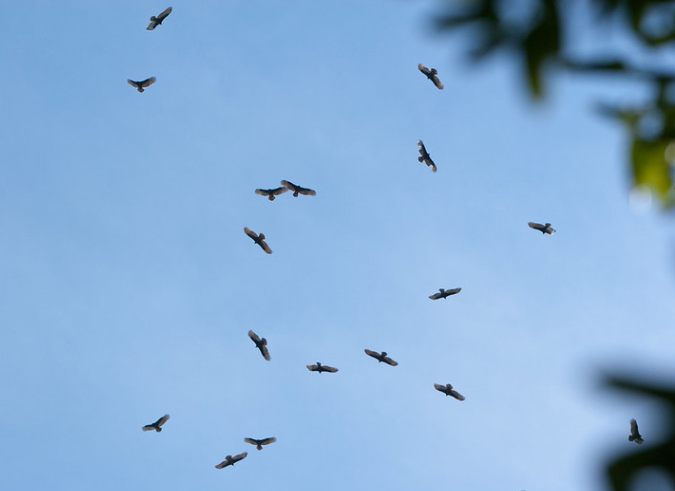
Have you ever noticed vultures circling in the sky and wondered what they’re doing? These large birds are often seen soaring in circles high above the ground, and there’s much more to it than meets the eye. Understanding why vultures display this behavior can provide valuable insights into their ecological role and natural instincts.
1. Vultures and Thermals
One of the primary reasons vultures circle in the sky is to take advantage of thermals, which are upward currents of warm air. As the sun heats the ground, warm air rises and creates these thermal updrafts. Vultures are experts at riding these currents, allowing them to soar effortlessly over large distances without expending much energy. This efficient flying technique is crucial for their survival, especially since vultures can often cover vast areas in search of food.
Another aspect of thermals is their unpredictability. Vultures need to be flexible in their circling patterns to find the most effective updrafts. When they identify a strong thermal, they will spiral upwards, gaining altitude with minimal effort. This allows them to survey their surroundings for potential food sources while conserving energy, giving them an excellent advantage as scavengers.
-
- Observe local thermals: Visit an open area and look for birds soaring—it’s a sign of thermal activity.
-
- Take note of weather conditions: Warm sunny days are ideal for thermals.
-
- Learn about thermal currents: Research how they form and vary by geography.
-
- Be patient: Sometimes, you may need to wait for the right conditions to see vultures circling.
2. Scavenging Behavior
The primary role of vultures in the ecosystem is scavenging, feeding mainly on carrion—dead animals. Circling in the sky allows them to cover a broad area, spotting potential food sources from high above. Due to their excellent eyesight, they can detect even the smallest disturbances on the ground that might indicate a carcass, such as other scavengers or smaller animals. This visual advantage is significantly enhanced when the vultures are able to soar high in the sky.
Moreover, the presence of circling vultures can signal the location of carrion to other scavengers, creating a cooperative feeding behavior. This makes them essential workers in the ecological system, helping to dispose of dead animals and prevent the spread of disease. Their unique ability to find food this way not only aids in their survival but also keeps ecosystems healthier by cleaning up waste.
-
- Understand their feeding habits: Vultures primarily feed on carrion, reducing the risk of disease.
-
- Identify their lookout points: Observing from a high vantage provides a clear view of their surroundings.
-
- Learn about their ecological role: Educate yourself on how vultures contribute to a healthy ecosystem.
-
- Share your knowledge: Talk with friends and family about the importance of vultures and other scavengers.
3. Social Behavior and Communication
Vultures are social birds that often communicate with each other while circling. When one vulture spots potential carrion, it may circle in a tight spiral to attract the attention of its peers. This cooperative behavior ensures that multiple birds can benefit from a food source, enhancing their chances of survival. Their ability to communicate through flight signals enables them to work together, which is especially useful when resources are scarce.
Furthermore, vultures engage in a variety of other social behaviors that can be observed while they are circling. For example, their acrobatics in the sky, such as tilting and rolling while flying, not only serve as methods of communication but also allow them to express dominance or establish social hierarchies within flocks. This social interaction is crucial in maintaining their communities and promoting survival in varying environmental conditions.
-
- Observe individual behavior: Watch how vultures interact when circling together.
-
- Learn the signs: Understand what different flight patterns may indicate about their social interactions.
-
- Join a birdwatching group: Share insights and learn from fellow enthusiasts.
-
- Help protect their habitats: Get involved in conservation efforts aimed at preserving the environments vultures rely on.
Understanding why vultures circle in the sky reveals a fascinating glimpse into their lives and behaviors. These birds are not just scavengers but essential components of our ecosystems. By observing and learning more about them, we can appreciate their critical role in nature and how they contribute to a balanced environment.
So the next time you see a vulture circling above, take a moment to appreciate its remarkable skills and ecological importance. Consider doing further research or even participating in activities that support bird conservation. Every little effort can help protect these magnificent creatures and their vital habitats.