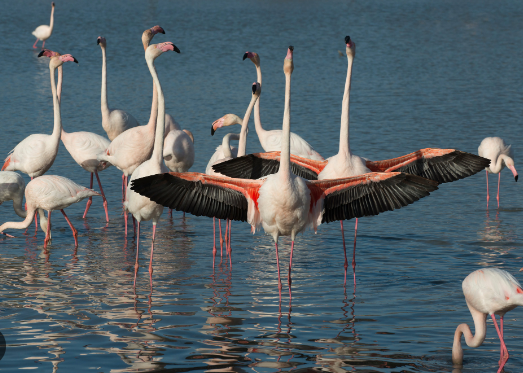
Flamingos are a captivating spectacle in the animal kingdom, known not only for their striking appearance but also for their fascinating social behavior. Their colonies and the elaborate courtship displays they engage in make for an intriguing study of animal behavior and mate selection.
The Structure of Flamingo Colonies
Flamingo colonies can be enormous, sometimes consisting of thousands of individuals. These groups can be found in various wetland habitats, including lagoons, estuaries, and salt flats. The colonies serve multiple purposes, including feeding, breeding, and safety from predators. Living in such large numbers allows flamingos to communicate effectively and coordinate their behaviors, which is essential for finding food and raising young.
Within these colonies, flamingos exhibit notable social hierarchy and group dynamics. Each colony features a set of dominant individuals, usually the older and more experienced birds. The hierarchy affects mating rights and access to resources such as food and nesting sites, ensuring that each flamingo knows its place within the community. This organization is essential for maintaining order and stability in what can be chaotic environments.
- Observe flamingo colonies in natural habitats to understand their social structure.
- Follow birdwatching guidelines to minimize disturbance to their natural behavior.
- Join a local wildlife group for organized trips to flamingo habitats.
- Take notes about the characteristics of each colony you visit.
- Research specific species in these colonies for deeper insights.
The Evolution of Courtship Displays
The courtship displays of flamingos are a remarkable blend of synchronized movements and vocalizations, designed to attract mates. These displays often consist of stretching their necks, flapping their wings, and performing intricate dances. Such behaviors help to strengthen pair bonds and signal their readiness to mate. Interestingly, the more elaborate the display, the more appealing a flamingo is to potential mates, as it indicates good health and genetic fitness.
Additionally, flamingos use a mixture of vocalizations during these displays, which can range from honks to grunts. This vocal communication plays an essential role in reinforcing social bonds and can even help flamingos identify one another within large colonies. Each display is an opportunity for the birds to showcase their strengths and find the most suitable partner.
- Observe the timing and rhythm of the courtship rituals.
- Record details of any interactions between pairs in your observations.
- Consider the environmental factors that may affect their displays.
- Be patient; these rituals can take time to unfold fully.
- Engage with local ornithologists for expert insights.
Importance of Breeding and Nesting in Colonies
Once paired, flamingos begin the nesting process, which is a critical phase in their life cycle. Typically, flamingos create mounds of mud as nests, often clustered close to one another to form a communal nesting area. This strategy has its benefits; when many nests are grouped together, they offer safety in numbers against potential predators. Flamingo chicks, known as hatchlings, are skillfully cared for by both parents, providing them with food and warmth until they can fend for themselves.
The nesting season is also a time of intense activity and competition, as flamingos must not only secure a good location for nesting but also protect their young once hatched. A successful breeding season depends heavily on environmental conditions, such as water availability and food supply. With their ability to adapt, flamingos have evolved to thrive in diverse climates, often returning to the same nesting sites year after year.
- Identify suitable nesting sites when visiting flamingo habitats.
- Document the number of nests and their condition within colonies.
- Understand the threats to nesting success, such as environmental changes.
- Create awareness about conservation efforts needed in these areas.
- Engage in citizen science projects focused on flamingo populations.
Flamingos illustrate the complexities of social interaction within animal species, particularly through their colonies and courtship behavior. Understanding these dynamics can deepen our appreciation of wildlife and encourage conservation efforts. Consider learning more about flamingos through guided wildlife tours, documentaries, or even decorative wildlife art such as a flamingo statue, which can bring their graceful form and distinctive presence into garden or landscape spaces.