Frigatebirds are remarkable creatures, often seen soaring through the skies of the tropics. With their impressive wingspan and distinctive behaviors, these aerial pirates dominate the skies over oceans and coastal regions. In this blog post, we will explore fascinating aspects of frigatebirds, their unique adaptations, feeding habits, and conservation efforts.
1. The Anatomy of the Frigatebird
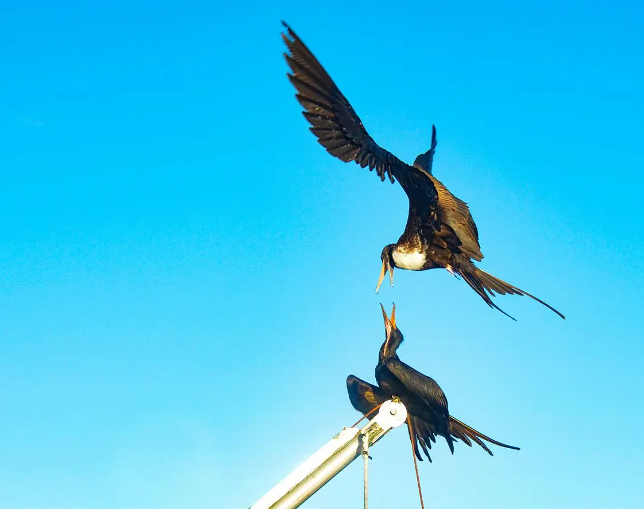
Frigatebirds are easily recognizable due to their long wingspan, which can reach up to 7.5 feet. This elongated structure allows them to glide for hours without flapping their wings, conserving energy while they search for food. Their bodies are sleek and lightweight, which further aids in their acrobatic flying abilities. The males are particularly noted for their bright red throat pouch, which they inflate during mating displays, attracting potential mates with a vibrant display.
These birds also have a remarkable sense of sight, enabling them to spot prey from great heights. Their keen eyesight allows them to locate schools of fish from above, while their hooked beaks are perfectly adapted for snatching food from the surface of the ocean. The combination of these adaptations makes them one of the most efficient predators in their habitat.
-
- Observe the wing structure: Notice how their long wings and tail help them maneuver.
-
- Watch for the red pouch: During mating season, males inflate their colorful throat pouch.
-
- Note their flight style: Frigatebirds often glide effortlessly, using updrafts to gain height.
-
- Take note of their body: The lightweight physique is designed for aerial efficiency.
2. Feeding Habits and Pirate Behavior
Frigatebirds are notorious for their opportunistic feeding habits, often referred to as “pirates of the sea.” They do not dive for their food but instead rely on their speed and agility to steal meals from other seabirds. These cunning tactics allow them to snatch fish and other prey right out of the beaks of gulls, terns, and pelicans. Their ability to quickly maneuver and harass other birds ensures an easy meal with minimal energy expenditure.
In addition to stealing from other birds, frigatebirds also feed on fish and squid near the water’s surface. They often follow schools of fish, waiting patiently to capitalize on any opportunities that arise. Their unique feeding strategies highlight their adaptability in the wild, making them successful predators in their ecosystem.
-
- Stay patient: Observe how frigatebirds track and intercept their prey.
-
- Learn to identify their targets: Recognizing the seabirds they often prey upon can be enlightening.
-
- Note the time of day: Feeding behaviors can vary based on the time of day and weather conditions.
-
- Appreciate the aerial displays: Watching them chase after other birds is a fascinating sight.
3. Conservation Status and Efforts
Despite their formidable presence in the skies, frigatebirds face several threats that impact their populations. Habitat destruction, particularly from coastal development, poses significant risks. Environmental changes, such as climate change and pollution, also affect their food sources. Notably, frigatebirds are vulnerable to plastic ingestion, which can lead to serious health issues and mortality.
Conservation efforts are essential to protect these magnificent birds and their habitats. Organizations are working to preserve nesting sites, particularly on islands where these birds breed. Public awareness campaigns also play a vital role in encouraging sustainable practices to reduce pollution and protect marine ecosystems. By focusing on these conservation initiatives, we can help ensure that frigatebirds continue to soar through our skies for generations to come.
-
- Get involved in local conservation groups: Your participation can make a difference.
-
- Reduce plastic usage: Small changes in daily habits can help reduce ocean pollution.
-
- Support eco-friendly organizations: Donating to wildlife conservation efforts can fund crucial projects.
-
- Advocate for protected habitats: Encourage local governments to prioritize natural spaces for wildlife.
Frigatebirds are extraordinary aerial pirates, combining stunning anatomy and impressive feeding strategies to thrive in tropical seas. As we work towards their conservation, understanding these incredible birds allows us to appreciate their role in our oceans. Whether through personal action or supporting wider initiatives, we can all contribute to safeguarding the future of frigatebirds. Let’s take the next step in appreciating and protecting these magnificent beings of the sky!