The Shoebill Stork, often described as a living fossil, is an astonishing creature that captures the imagination of bird enthusiasts and nature lovers alike. Found primarily in the swamps of Central and East Africa, this prehistoric-looking bird boasts unique physical characteristics and fascinating behaviors that set it apart in the avian world.
1. Unique Anatomy and Appearance
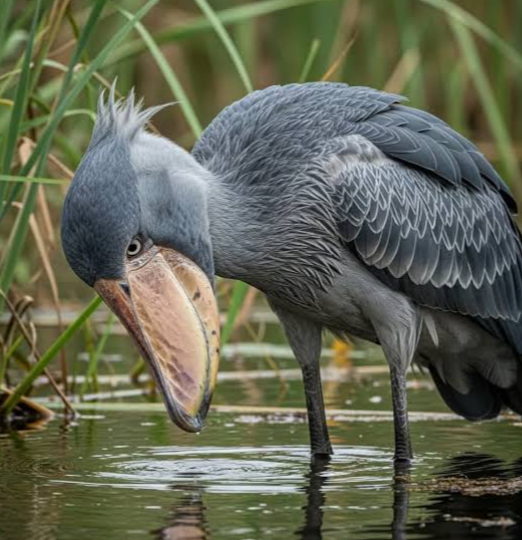
The Shoebill Stork’s most striking feature is its enormous, shoe-shaped bill, which can measure up to nine inches long. This bill is perfectly adapted for its hunting needs, enabling the bird to catch prey such as fish and amphibians with precision. The stork has a tall stature, standing at around 4 to 5 feet and weighing between 11 to 15 pounds, making it an imposing figure in the swamp environment. Its plumage is primarily a bluish-grey, providing excellent camouflage among the reeds.
In addition to its bill, the Shoebill’s large, reflective yellow eyes give it keen vision, crucial for spotting movements in murky waters. This bird also has long legs that make it adept at wading through shallow swamps. The Shoebill’s head and neck have a relatively small size compared to its body, adding to its prehistoric appearance, reminiscent of dinosaurs and ancient birds.
-
- Observe the Shoebill at a zoo or sanctuary for a close look at its features.
-
- Learn to identify its silhouette in the wild by studying pictures and descriptions.
-
- Understand the significance of the Shoebill’s bill in its hunting strategy.
-
- Research adaptations of other swamp birds for comparative learning.
2. Habitat and Distribution
Shoebill Storks are primarily found in the wetlands of South Sudan, Uganda, Tanzania, and Zambia. They thrive in swamps and marshes, where they can easily hunt for food. These birds prefer shallow water bodies, where they can wade and stalk their prey. The dense vegetation of these habitats provides not only food but also cover from potential predators, allowing the Shoebill to nest and raise its young.
-
- Support conservation organizations focused on wetland protection.
-
- Learn about local wetland ecosystems to appreciate their importance.
-
- Participate in habitat restoration projects in your area.
-
- Advocate for sustainable agricultural practices to minimize habitat loss.
3. Feeding and Hunting Techniques
The Shoebill Stork is an ambush predator, using patience and stealth to catch its prey. It primarily hunts fish, particularly lungfish, but will also eat amphibians, reptiles, and small mammals. With its large bill, the Shoebill can strike at remarkable speed, grasping its prey with precision. Often, this bird will stand perfectly still for long periods, waiting for the right moment to strike.
This hunting technique is energy-efficient, allowing the Shoebill to conserve energy while still effectively capturing meals. The stork’s ability to sense vibrations in the water helps it locate prey. Given the vulnerability of its swamp habitat, the Shoebill has adapted by becoming an opportunistic feeder, adjusting its diet according to availability.
-
- Observe the feeding habits of local birds to understand their hunting techniques.
-
- Learn about the different species of prey the Shoebill consumes.
-
- Explore the ecological role of predators in wetland ecosystems.
-
- Take note of the importance of fish conservation in maintaining a balanced ecosystem.
4. Breeding and Parental Care
The breeding season for Shoebills varies, usually coinciding with the rainy season in their habitat. These birds are monogamous, forming long-lasting pairs that return to the same nesting sites year after year. The female typically lays one to three eggs, which both parents incubate for about 30 days. After hatching, the chicks are initially helpless but grow rapidly, gaining independence within a few months.
Parental care is essential for the survival of the young. Both parents are active in feeding their chicks, often regurgitating food for them until they can hunt on their own. This nurturing behavior is vital, as the chicks face various threats, including predators and competition for food. Observing the parenting skills of the Shoebill can offer insights into the complexities of avian relationships and survival strategies.
-
- Research how different birds care for their young to draw comparisons.
-
- Follow the breeding season to better understand their life cycle.
-
- Engage with nature programs that focus on breeding bird behavior.
-
- Consider volunteering with wildlife organizations that support species monitoring.
In conclusion, the Shoebill Stork is a remarkable example of nature’s adaptability and resilience. Understanding its unique characteristics and the challenges it faces can inspire us to take action in conservation efforts. Whether you are a nature enthusiast or someone interested in wildlife, consider contributing to the protection of these incredible birds and their habitats.