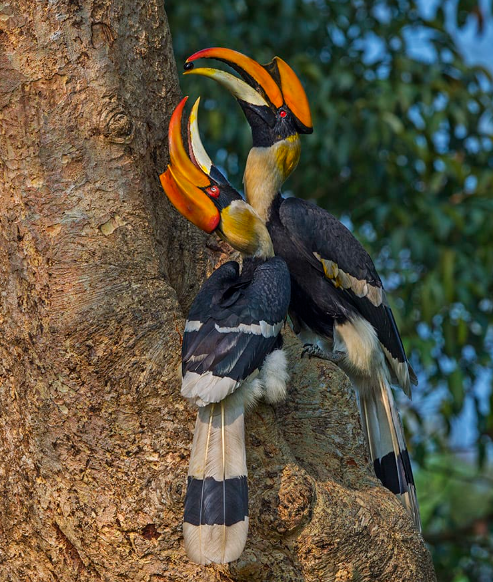
Hornbills are fascinating birds known for their unique nesting behavior, particularly their use of tree cavities. The process of nesting is an intricate dance of cooperation and adaptation, showcasing the remarkable ways these birds ensure the survival of their species.
1. The Nesting Process
The nesting process of hornbills begins with the female selecting a suitable tree cavity. They often prefer trees that are tall and sturdy, providing both safety from predators and a suitable environment for raising their young. Once she has chosen a cavity, the female enters it and begins the process of sealing herself inside. This act often involves the female using mud, fruit pulp, and other materials to create a barrier, leaving only a small opening for the male to deliver food.
During this time, the female is essentially trapped within the cavity, laying eggs and incubating them in complete safety. This nesting strategy helps protect the vulnerable chicks from various predators. The male plays a crucial role, as he must not only feed the female but also bring food to the chicks once they hatch, showcasing a strong partnership in parenting.
-
- Research local hornbill species to understand their specific nesting needs.
-
- Select trees that are suitable for nesting; consult local ornithologists if needed.
-
- Observe hornbill behavior to see how they interact with their environment.
-
- Monitor the nest site to ensure it remains safe from predators.
2. Parental Cooperation
Hornbill parenting is a collective effort that highlights the bond between male and female. The male hornbill is responsible for bringing food to the sealed female and, later, the chicks. He will often forage for insects, fruits, and other food sources, which he delivers through the narrow opening of the nest. This unique feeding system allows the female to care for the eggs and later the chicks without leaving the safety of the cavity.
This division of labor is essential as it maximizes the safety and nurturing of the young. The male’s commitment doesn’t end once the chicks hatch; he must continue to provide food and protection until they are old enough to leave the nest. This intense form of parental investment is one of the reasons hornbills are so successful in their habitats.
-
- Watch for signs of male hornbills foraging for food; it’s part of their parenting role.
-
- Document feeding behaviors to better understand parental cooperation.
-
- Study the growth stages of the chicks to appreciate their development.
-
- Help protect nesting sites by informing others about the importance of hornbills in the ecosystem.
3. The Role of Tree Habitats
The choice of tree habitat is critical for hornbills and their nesting habits. For successful nesting, they require trees with hollows that are not only deep enough to protect the chicks but also positioned high enough to deter predators. Many hornbills prefer indigenous tree species that are vital to their diet and ecosystem. The availability of suitable trees can significantly impact their population dynamics.
Moreover, the surrounding environment also plays a crucial role. A healthy forest, full of diverse plant life, supports the hornbill’s dietary needs and provides ample nesting sites. Conservation of these habitats is essential, not just for hornbills but for the ecological balance where they live. Sustainable forest management practices can greatly aid in preserving these tree habitats.
-
- Engage in local conservation efforts to protect hornbill habitats.
-
- Encourage responsible forestry practices in your area to support local ecosystems.
-
- Participate in tree planting initiatives to replenish native tree species.
-
- Educate others about the importance of tree habitats for avian life.
4. Evolutionary Strategies
Hornbills have evolved unique strategies that facilitate their survival and reproductive success. Their nesting behavior is a direct adaptation to environmental pressures, including predation and food availability. The female’s ability to seal herself inside the cavity plays a significant role in minimizing risks from predators that might attack the unprotected young. This drastic measure has proven effective over generations.
Additionally, the resourcefulness of hornbills in finding and utilizing nesting sites showcases their evolutionary adaptability. The diverse diets and behaviors among different species of hornbills reflect their ability to exploit a variety of ecological niches, thus reducing competition and allowing for coexistence in shared habitats.
-
- Explore the evolutionary adaptations of different hornbill species in various habitats.
-
- Investigate how environmental changes impact hornbill nesting behaviors.
-
- Stay informed about ecological conservation efforts that support hornbill populations.
-
- Encourage research on the impact of climate change on hornbill nesting sites.
Understanding the nesting behavior of hornbills provides valuable insights into their life cycles and the ecological roles they play. As you learn about these incredible creatures, consider engaging with local conservation efforts to help protect them and their habitats for future generations. Every action counts!