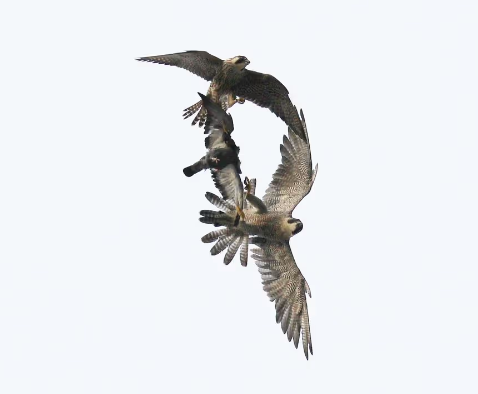
Raptors, or birds of prey, showcase a fascinating aspect of wildlife through their interactions while hunting. These magnificent creatures, including eagles, hawks, and owls, often engage in fierce battles over their prey. Understanding these interactions not only highlights their hunting strategies but also paints a vivid picture of the ecosystem’s dynamics.
1. The Dynamics of Competition
In the wild, competition for food is a natural part of a raptor’s life. When multiple raptors converge on a single prey source, the dynamics can become intense. Birds such as red-tailed hawks and golden eagles may find themselves circling above a small mammal that has been spotted. Their keen eyesight allows them to pinpoint their prey from great distances, but once they arrive, they must also contend with others who have the same target in mind.
This type of competition not only involves aerial displays and vocalizations but physical confrontations as well. Raptors have powerful beaks and talons that can cause serious harm. The winner of these conflicts may be determined not only by size and strength but also by agility and clever tactics. Observers often note that larger species tend to dominate, but smaller or more agile raptors can employ cunning methods to snatch food from their larger competitors.
-
- Learn about different raptor species in your area.
-
- Observe their hunting techniques during different seasons.
-
- Take note of their vocalizations during competition.
-
- Use binoculars for a closer look at their interactions.
2. Strategies for Success
Raptors employ various strategies to outsmart one another during competition for food. Some may engage in aerial displays to assert dominance, showcasing their wingspan and agility. In situations where physical confrontation is imminent, agility often prevails. Smaller species might fly low and quickly maneuver to steal food right out from under larger raptors.
In addition to physical tactics, raptors also use stealth and surprise. Some may wait patiently in a tree, watching their competitors before descending swiftly to catch prey that has been largely ignored. This patience can pay off, allowing them to avoid direct confrontations while still securing a meal. Each raptor species has unique adaptations that enhance its hunting expertise, which plays a crucial role in their survival.
-
- Observe how different raptors establish territory.
-
- Watch for stealth approaches during feeding.
-
- Learn about the mating rituals that impact competition dynamics.
-
- Document their hunting success rates in your observations.
3. Ecological Impact of Raptors
The behavior of raptors fighting over prey serves as a reminder of their role in the ecosystem. These birds help regulate populations of small mammals, birds, and even insects, contributing to ecological balance. When raptors engage in competition, they not only secure their own survival but also influence the prey populations’ health and distribution.
As apex predators, raptors set an example of the natural cycles of life. Their interactions provide essential lessons on survival, competition, and the importance of biodiversity within ecosystems. A high population of competing raptors can indicate a healthy, diverse ecosystem, whereas the decline of these birds could signal underlying environmental issues.
-
- Research local raptor populations and their impact on biodiversity.
-
- Support local conservation efforts to protect raptor habitats.
-
- Get involved in citizen science projects to monitor raptor populations.
-
- Share your findings with local environmental groups.
Raptors fighting for prey showcases an essential dance of survival in nature. These birds demonstrate not only physical might but also intelligence and strategic thinking that are crucial for their success in different habitats. By observing and learning about their competitive behaviors, we gain insight into the intricate web of the natural world.
In conclusion, understanding the behavior of raptors in the wild can enhance our appreciation for these magnificent birds and the ecosystems they inhabit. Whether you’re a bird enthusiast or simply curious about wildlife, consider exploring local habitats or consulting nature guides for a deeper dive into raptor behaviors and conservation. The more we know, the better we can advocate for their protection.